
How to Choose a Presentation-Day Outfit Without Power-Dressing Rules
Start with the presentation setting, use only the dress constraints that are actually stated, and build from classic, neutral pieces. This body-neutral guide keeps outfit review practical and editorial examples clearly labeled.
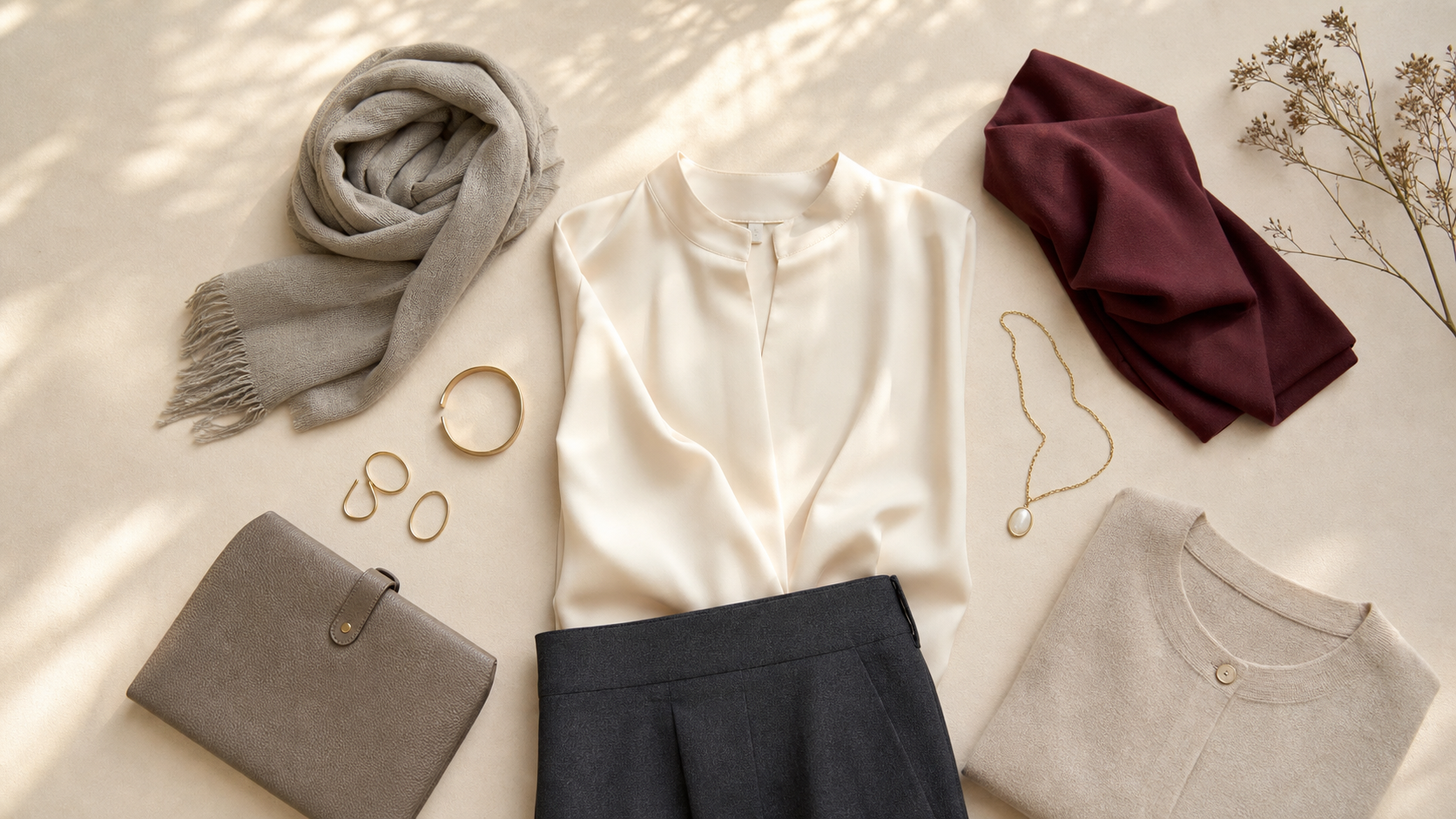
Key points
- Start with the presentation context before choosing garments.
- Use only the dress constraints that are explicitly supplied.
- Classic, versatile pieces and neutral colors are a reliable starting point when they fit the brief.
- Make small changes one visible element at a time instead of rebuilding the entire outfit.
- Keep all exact combinations clearly labeled as editorial examples.
- Stay body-neutral and avoid claims about confidence, authority, or outcomes.
Start with the presentation context
If you want to choose a presentation-day outfit without power-dressing rules, begin with the user-supplied context before you think about individual garments. The approved sources support a simple sequence: look at the dress code, consider the occasion or work environment, note responsibilities, observe what others wear when that information is available, and check the company culture or stated setting.
That order matters because the outfit should be reviewed against the context that was actually provided. This keeps the process grounded in user-supplied details instead of assumptions about body, role, workplace, budget, or preferences.
If the presentation setting is not fully described, treat the missing parts as questions to ask rather than facts to fill in yourself.
Identify the explicit dress constraints
A useful presentation-day review starts by separating what is stated from what is not.
Use only the constraints that are explicitly supplied, such as:
- a formal or business-casual setting
- a request to keep the look simple
- a stated preference for a blazer or a layer
- a note about whether accessories should stay low-key
- any other direct guidance the person has given
Do not add assumptions about what the audience expects, what the workplace prefers, or what the person already owns. The sources support a body-neutral approach, which means describing garments and combinations without making guesses about the reader’s body, wardrobe, or personal style preferences.
If the information is incomplete, a careful answer can simply say that more context is needed.
Coordinate rather than power-dress
The evidence supports optional coordination instead of a power-dressing formula. In practice, that means building from classic, versatile pieces and checking whether they fit the stated setting.
Common foundation pieces include blazers, button-up shirts, blouses, tailored trousers, skirts, dresses, and simple outerwear. Neutral colors and simple, timeless shapes are presented as a reliable starting point in classic business styling, with examples such as black, navy, gray, white, and muted tones.
This does not mean every presentation outfit has to look identical. It means the first pass is usually cleaner and easier when the outfit is built from well-matched, classic elements and then adjusted to the setting.
Editorial example: a presentation in a formal business setting
Editorial example: a blazer, a button-up shirt, and tailored trousers.
Editorial example: a presentation in a more understated setting
Editorial example: a blouse, a skirt, and a simple outer layer.
These are examples of coordination, not universal rules. The exact combination should still be checked against the stated dress constraints.
Change one visible element at a time
When several combinations seem workable, the approved sources support making small styling updates rather than rebuilding the entire outfit. A single visible change can be enough to adjust the look while keeping the rest stable.
That change might be:
- one accessory
- one layer
- one garment
- one texture choice
This is useful when the presentation setting is already clear and you only need to move the outfit slightly closer to it. It also helps keep the review process simple: compare the same base outfit, then change one element and reassess.
Editorial example: one-layer adjustment
Editorial example: keep the blouse and trousers the same, then swap the outer layer.
Editorial example: one-accessory adjustment
Editorial example: keep the main outfit the same, then change one accessory and review whether it still matches the stated setting.
The sources support subtle updates such as accessories, patterns, or texture while keeping the overall look coordinated.
Keep comfort and mobility as stated requirements
Comfort and mobility should be treated as user-supplied information, not assumptions. If the person says they need to sit for a long time, move between rooms, carry materials, or stay on their feet, those needs can be included in the review.
If no such details are provided, do not infer them.
A practical way to handle this is to separate the outfit review into two questions:
- Does the combination match the stated presentation setting?
- Does it also fit any explicitly supplied comfort or mobility notes?
That keeps the answer factual and avoids turning the outfit into a promise about performance, authority, or social outcome.
Editorial examples of presentation contexts
The safest way to use examples is to label them clearly as editorial examples and keep them generic.
Editorial example: office talk
Editorial example: the setting is a business-casual office talk, and the supplied garments are a blazer, shirt, and trousers.
Editorial example: seminar presentation
Editorial example: the setting is a seminar with a formal dress constraint, and the supplied garments are a blazer, blouse, and tailored skirt.
Editorial example: client-facing talk
Editorial example: the setting is a client-facing presentation, and the user asks for the outfit to stay simple with only one visible change.
Editorial example: conference session
Editorial example: the setting is a conference session, and the supplied items are a blouse, a skirt, and a lightweight layer.
These examples are intentionally generic. They show how to frame the review process without implying ownership, body type, workplace expectations, or personal preferences.
Avoid authority or outcome claims
A presentation-day outfit can be discussed as a coordination exercise, but it should not be presented as evidence that clothing changes confidence, credibility, competence, influence, success, or attention.
That boundary is important for two reasons. First, it keeps the advice body-neutral and respectful. Second, it stays aligned with the evidence, which supports context-based styling rather than outcome-based claims.
Useful wording focuses on what can actually be checked:
- Does the outfit match the stated setting?
- Are the pieces coordinated?
- Are the layers, footwear, and accessories consistent with the brief?
- Has the look been adjusted using only the information the person supplied?
This is a practical styling method, not a promise of professional results.
A body-neutral presentation-day checklist
Here is a simple checklist for reviewing a presentation outfit in a neutral, user-led way.
1. Confirm the setting
- What is the presentation context?
- Is there a stated dress code or level of formality?
- Is there any guidance about company culture, the occasion, or what others wear?
2. List only the supplied garments
- Which pieces were actually named?
- Which layers, footwear, and accessories were explicitly included?
- Is anything missing from the brief that needs to be asked about?
3. Check the foundation pieces
- Do the garments belong to the classic coordination set supported by the sources?
- Are the colors and shapes neutral or timeless where appropriate?
- Does the combination stay coherent as a whole?
4. Review the visible details
- Do the accessories remain consistent with the stated setting?
- Does the layering still make sense in the context?
- Is there a single element that should be changed instead of the whole outfit?
5. Recheck the final match
- Does the full combination still fit the presentation context?
- Have any added assumptions slipped in?
- Are all judgments based on what the user actually supplied?
If you want a second perspective, you can also compare the outfit against a separate guide to coordinated workwear, such as Smart-Casual Work Wardrobe, as long as you keep the comparison grounded in the stated presentation setting.
When the best answer is a question
Sometimes the most careful response is not an outfit recommendation yet. It is a request for more detail.
Ask for clarification when you need to know:
- the exact presentation setting
- the stated dress constraints
- which garments were supplied
- whether any specific layer or accessory must stay in the outfit
- whether the person wants a short scan checklist or a more detailed review
That approach keeps the advice useful without guessing about wardrobe ownership, body shape, workplace expectations, or budget.
FAQ
How do I choose between several possible outfits?
Start with the presentation context, then compare each option against the stated dress constraints. If more than one combination fits, change only one visible element at a time and see which version still matches the brief.
Should exact outfit combinations be treated as rules?
No. Exact combinations should be treated as editorial examples only. The sources support coordination principles, not universal formulas.
What if the presentation setting is vague?
Say that the setting needs to be clarified. A body-neutral answer can only compare garments against a stated context if that context has actually been supplied.
Can I mention comfort or mobility on my own?
Only if the person has said those needs matter. Comfort and mobility should be handled as user-supplied constraints, not assumed from the outside.
Is a neutral outfit always the right answer?
Not necessarily. The sources present neutral colors and simple shapes as a reliable starting point in classic business styling, but the final choice still depends on the stated setting and the supplied garments.
Why label some combinations as editorial examples?
Because exact garment pairings should not be mistaken for universal rules. Labeling them clearly helps keep the article factual, conditional, and body-neutral.
A simple way to use this method
If you are helping someone choose a presentation-day outfit, use this sequence:
- Identify the setting.
- Extract only the explicit dress constraints.
- Compare the supplied garments against those constraints.
- Start from classic or neutral foundations when that fits the brief.
- Make one visible change at a time if refinement is needed.
- Recheck the final look against the stated context.
That is the clearest way to choose a presentation-day outfit without power-dressing rules: keep the process tied to the setting, the stated constraints, and the garments that were actually supplied.
Questions readers often ask
How do I choose between several possible outfits?
Start with the presentation context, then compare each option against the stated dress constraints. If more than one combination fits, change only one visible element at a time and see which version still matches the brief.
Should exact outfit combinations be treated as rules?
No. Exact combinations should be treated as editorial examples only. The sources support coordination principles, not universal formulas.
What if the presentation setting is vague?
Say that the setting needs to be clarified. A body-neutral answer can only compare garments against a stated context if that context has actually been supplied.
Can I mention comfort or mobility on my own?
Only if the person has said those needs matter. Comfort and mobility should be handled as user-supplied constraints, not assumed from the outside.
Is a neutral outfit always the right answer?
Not necessarily. The sources present neutral colors and simple shapes as a reliable starting point in classic business styling, but the final choice still depends on the stated setting and the supplied garments.
Why label some combinations as editorial examples?
Because exact garment pairings should not be mistaken for universal rules. Labeling them clearly helps keep the article factual, conditional, and body-neutral.
Need a calmer way to compare the options?
Use the same context-first method to review only the garments and constraints that are actually supplied. Smart Wardrobe can help you compare combinations without assuming body, budget, or wardrobe ownership.
Compare the supplied options