How to Use Texture in an Outfit Without Making It Feel Busy
Texture can add interest to an outfit when it is used deliberately. This guide shows how to balance textured pieces, keep the rest of the outfit simpler, and leave colour coordination to the separate colour guide.
Key points
- Texture can add interest when it is used deliberately rather than across every item.
- A textured piece is easier to wear when the rest of the outfit stays simpler.
- Traditional silhouettes and good fit help texture feel polished.
- Repeating texture or pattern too much can make an outfit feel visually crowded.
- Colour should remain secondary here and be handled in the separate colour guide.
What texture means in an outfit
Texture is the visual and tactile quality of a fabric or finish. In practice, it is one of the easiest ways to add interest to an outfit without adding more colour or more pattern.
The approved sources support using textured items as deliberate accents rather than spreading texture across every piece. Examples from the source material include tweed and jacquard in traditional silhouettes, as well as knitted or woven effects that add interest to an outfit. Used this way, texture can remain polished rather than overwhelming.
Source-supported balance principles
The main principle is simple: if one piece has visible texture, let the rest of the outfit stay calmer. The source guidance for knitted-effect shoes recommends pairing them with sleek, simple outfits and avoiding other heavily textured pieces. That same idea applies more broadly: texture reads best when it has space around it.
Fit and quality matter as well. Even when texture is chosen well, poorly fitting or low-quality garments can weaken the overall effect. The approved sources emphasize proper fit, quality fabrics, and good construction, alongside well-fitting basics and versatile pieces.
Choose one visual focus
A textured piece works best when it is clearly the focus. That can be a jacket, a top, a shoe, or another item with a noticeable surface. If the rest of the outfit stays simpler, the texture is easier to read and the outfit is less likely to feel crowded.
This is also why restrained styling matters for professional or polished outfits. The business wardrobe source places textures such as tweed or jacquard inside traditional silhouettes, showing that texture does not have to feel casual or decorative only. It can fit into a more composed look when the overall styling stays restrained.
Editorial example: pair texture with calmer surfaces
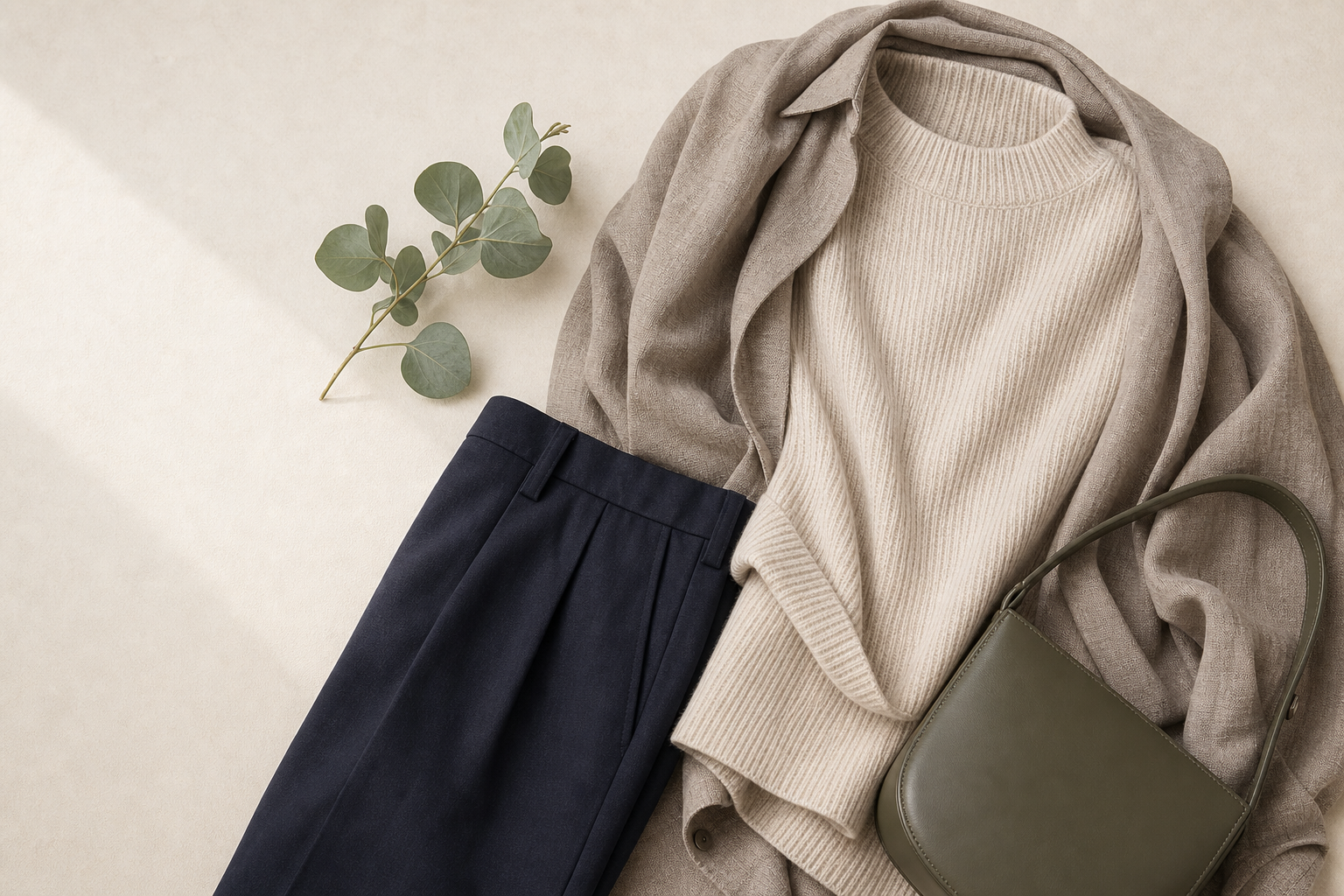
- Editorial example: A textured jacket with plain trousers and a simple top.
- Editorial example: A textured top with a smooth skirt and minimal additional detail.
- Editorial example: A woven-looking shoe with an otherwise simple outfit.
These are examples only. The sourced principle is that calm surrounding pieces help the textured item stand out without creating visual clutter.
Editorial example: vary texture scale and repetition
The source guidance also suggests restraint with repeated prints or textures. Large amounts of matching pattern elements can overwhelm an outfit, so a smaller proportion is safer than a full repeat.
- Editorial example: One textured item echoed by a small accessory in a related surface, rather than repeating the same texture throughout the whole outfit.
- Editorial example: One patterned or textured accessory paired with otherwise quiet clothing surfaces.
- Editorial example: A textured shoe combined with smooth clothing rather than another heavily textured layer.
Texture with colour and pattern
Colour should stay secondary in this topic. The approved colour source provides separate rules for colour coordination, including a two-colour rule and neutral foundations, which supports keeping colour guidance distinct here. In other words, this article stays focused on texture and balance rather than turning into a colour guide.
Pattern and texture can work together, but the same restraint applies. If there is already a strong surface effect, adding more competing detail can make the outfit feel busy. The safer approach is to keep the visual load controlled and let each element do one job.
Common overload risks
The main risks are straightforward:
- Too many textured pieces at once
- Too much repeated pattern or texture
- Overly detailed layering
- Fit and construction are also worth reviewing when assessing the overall outfit
A useful check is to pause before adding one more detail and ask whether it improves the outfit or simply increases noise. If the textured piece already provides interest, the rest of the look usually does not need to compete with it.
FAQ
Can texture work in a professional outfit?
Yes. The approved business wardrobe source shows that textures such as tweed or jacquard can work in traditional silhouettes and still support a professional look when styling remains restrained.
What is the simplest way to balance a textured piece?
Keep the rest of the outfit simpler. The source guidance for textured footwear recommends sleek, simple outfits and avoiding other heavily textured pieces.
Can belts help with textured or layered outfits?
Yes. The belt source says belts can add style and structure to layered outfits and should be worn on the outermost layer to complete the look.
Should I cover colour here as well?
Only lightly. Colour coordination is handled more fully in the separate colour guide, so this article keeps colour secondary and focuses on texture balance instead.
Related reading
If you want to keep the rest of the outfit visually calm, this guide pairs well with:
Questions readers often ask
Can texture work in a professional outfit?
Yes. The approved business wardrobe source shows that textures such as tweed or jacquard can work in traditional silhouettes and still support a professional look when styling remains restrained.
What is the simplest way to balance a textured piece?
Keep the rest of the outfit simpler. The source guidance for textured footwear recommends sleek, simple outfits and avoiding other heavily textured pieces.
Can belts help with textured or layered outfits?
Yes. The belt source says belts can add style and structure to layered outfits and should be worn on the outermost layer to complete the look.
Should I cover colour here as well?
Only lightly. Colour coordination is handled more fully in the separate colour guide, so this article keeps colour secondary and focuses on texture balance instead.
Explore texture combinations with a calm next step
If you want to compare how different textures relate to each other, review the items you explicitly add and see which combinations stay balanced and visually restrained.
Explore Smart Wardrobe