
Clothing Proportion Mistakes: How to Describe Garments Neutrally
If you want to describe clothing proportions without body judgment, the key is to talk about garments, lines, lengths, and volume. This guide is for readers comparing outfit composition and learning how to avoid common wording mistakes such as treating one ratio as ideal or turning description into correction advice.
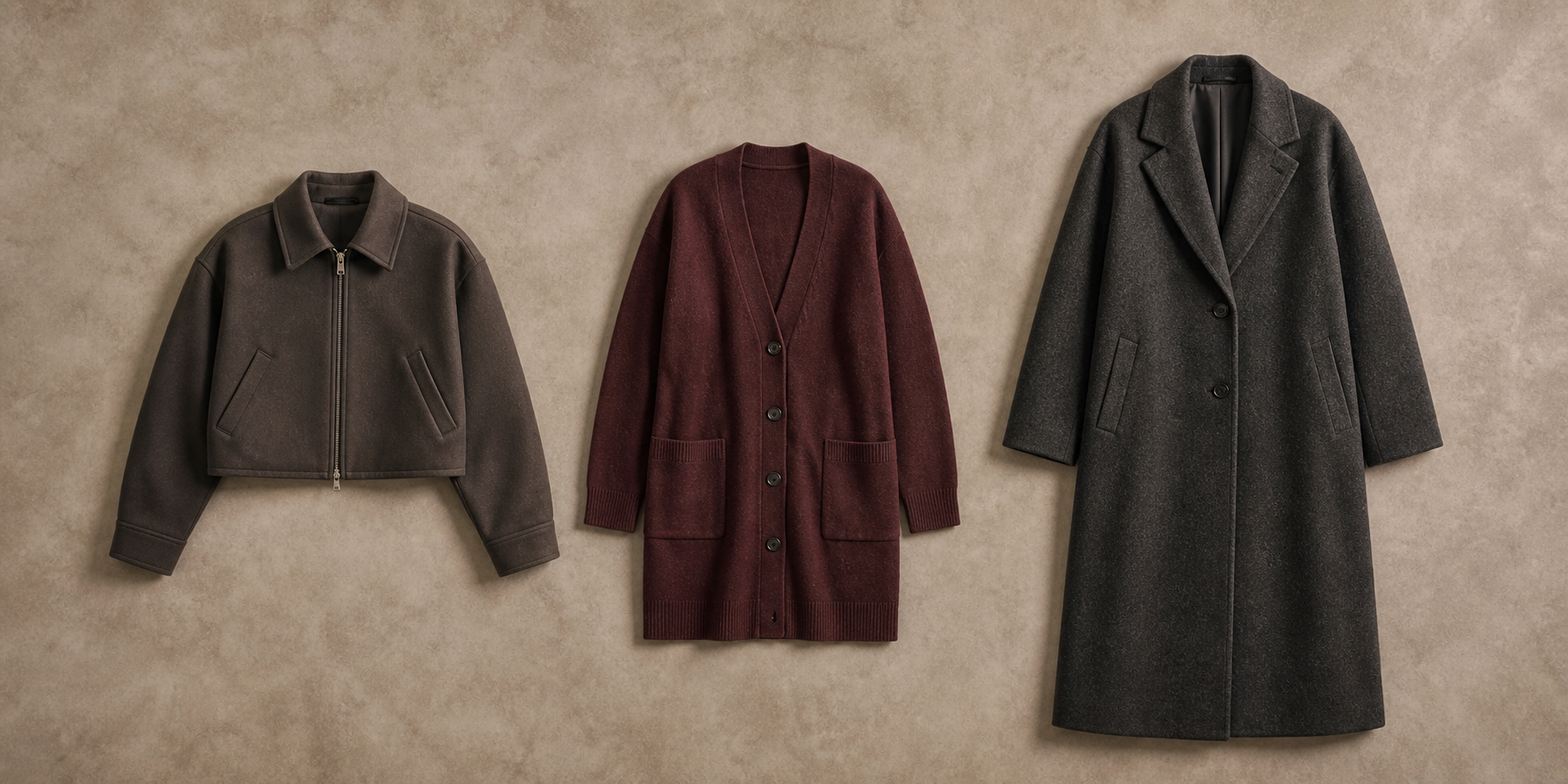
Key points
- Describe garments, lengths, volumes, lines, and visual composition instead of judging a body.
- Treat editorial proportion ideas as examples, not universal rules.
- Avoid flattering, correcting, slimming, or minimizing language.
- Use upper, middle, and lower only as garment or visual zones, not body categories.
- Do not guess workplace, occasion, lifestyle, budget, or preferences.
Direct answer: the most common clothing-proportion mistakes
The most common clothing proportion mistakes are not only visual; they are also linguistic. A proportion description becomes unclear when it starts judging a body, assuming personal context, or presenting one composition as universally correct. In the approved sources, proportion language is tied to body types, balance, ideal looks, and minimizing perceived flaws. For a body-neutral article, that framing needs to be translated into neutral garment language: lengths, volume, line, silhouette, and visible composition.
That means describing what is seen, not what a body is said to need. It also means separating editorial examples from rules. An outfit formula can be useful as an illustration, but it should not be treated as a universal standard.
For readers comparing garment configurations, this article shows how to spot wording that turns description into judgment, guesswork, or correction advice.
Mistake 1: judging a body instead of describing garments
A common mistake is to write as if the goal is to classify a person, rather than describe a garment arrangement. The approved sources use body-type analysis and proportion-balancing language, so a neutral rewrite should shift the focus from the wearer to the clothes.
Instead of saying a look is good or bad for a body, describe the garment relationship itself:
- the length of one layer compared with another
- the volume of an outer piece versus an inner piece
- the placement of visible lines or breaks
- how the overall silhouette reads as a composition
This avoids body judgment and keeps the language anchored in what can actually be observed.
A useful wording test
If a sentence depends on knowing a reader’s body shape, measurements, or negatively labelled body areas it is no longer a neutral proportion description. It has moved into body-based interpretation.
Mistake 2: treating one ratio as ideal
The approved material includes “ideal look” and “best possible look” framing. That can be useful inside an editorial system, but it should not be rewritten as a universal truth.
A more neutral approach is to say that an editorial proportion creates one kind of visual composition. It does not mean that one ratio is always better, more correct, or more appropriate for everyone.
This distinction matters because proportion language can sound objective even when it is really a style preference. If you call one arrangement the standard, readers may assume there is a single right answer. The brief does not support that conclusion.
Editorial example of a proportion idea
Editorial example: a cropped upper layer with a longer lower layer can be described as a length contrast.
That is an illustration, not a rule.
Mistake 3: turning visual description into correction advice
Another common mistake is to move from description into correction language. The approved sources include wording about highlighting features and minimizing perceived flaws, but a body-neutral article should not repeat that logic.
A neutral description says what the garment does visually:
- it creates a shorter upper section and a longer lower section
- it adds width in one layer and narrowness in another
- it introduces a strong horizontal break or a continuous vertical line
Correction language says what the outfit is supposedly doing to a body:
- fixing
- hiding
- balancing
- slimming
- flattering
- minimizing
Those terms turn a visual observation into a value judgment. In a neutral guide, the safer and clearer choice is to describe the composition without implying that one body needs improvement.
Mistake 4: ignoring garment length, volume and line relationships
If proportion language becomes too vague, it often hides the real issue: the relationship between garment length, volume, and line. These are the most useful terms when you want to stay neutral.
A helpful structure is to ask three questions:
- Length: Where does the garment end compared with the next layer?
- Volume: Which pieces are fuller, broader, or closer to the body?
- Line: What visual line does the outfit create through vertical continuity, visible breaks, or a layered shape?
This framework keeps the discussion on visible composition. It also avoids guessing about the wearer’s body or personal goals.
Quick comparison
| Less precise wording | Neutral garment-focused wording | |---|---| | “This balances the body.” | “This creates a longer vertical line through layered lengths.” | | “Change the body rather than the garment.” | “That changes where the eye meets a visible break in the outfit.” | | “This flatters every figure.” | “This is one editorial composition with a specific silhouette.” |
Mistake 5: treating upper, middle and lower zones as body categories
The sources use upper, middle, and lower body language. In a body-neutral article, those zones should not be used to categorize the reader. They can be used only as garment zones or visual zones when you need a shared reference point for composition.
That means writing about where a hem falls, where a jacket ends, or where a line break appears. It does not mean assigning the reader to a body category.
A neutral zone-based description might say:
- upper area of the garment composition
- middle area of the garment composition
- lower area of the garment composition
Those phrases describe the outfit, not the person. That distinction is important because the source material ties these zones to body analysis, while this article is translating that language into a compositional vocabulary.
Mistake 6: guessing context or preference
The approved sources mix styling with age, occupation, lifestyle, preferences, and psychological outcomes. A neutral proportion guide should not do that.
Do not assume:
- what someone does for work
- what they like wearing
- what budget they have
- what occasion they are dressing for
- how they want to feel after dressing
Those assumptions turn a proportion explanation into a story about the person, and the brief explicitly says not to infer those details. The safer method is to stay with the garment itself.
For example, if a composition has a long outer layer and a narrow inner layer, you can describe that structure without saying who would want it or what it would achieve socially or emotionally.
Mistake 7: presenting an editorial configuration as a rule
This is one of the easiest mistakes to make because an editorial example can sound tidy and persuasive. But the brief is clear: exact combinations are editorial examples, not research-backed universal rules.
So if you include an outfit formula, label it as an illustration. Do not imply it is always correct, always recommended, or suitable for everyone.
That distinction also helps separate description from advice:
- Description: what the composition looks like
- Editorial example: one way to combine lengths or volumes
- Rule: a claim that it should work for everyone, which the sources do not support
Three clearly labelled editorial examples
Editorial example: a short top paired with a long, straight lower layer, described as a length contrast rather than a body correction.
Editorial example: a wide outer layer combined with a narrow inner layer, described as a volume relationship rather than a universal proportion rule.
Editorial example: a cropped upper layer, defined middle layer, and full lower layer, described as a three-part composition rather than a body category map.
A final body-neutral wording checklist
Use this checklist when reviewing clothing-proportion language:
- Describe garments, not bodies.
- Use length, volume, line, silhouette, and composition as your core terms.
- Treat upper, middle, and lower zones as visual zones only when needed.
- Keep editorial examples clearly labeled as examples.
- Avoid flattering, correcting, minimizing, or slimming language.
- Do not guess context, occupation, occasion, or preference.
- Do not present one ratio as universally ideal.
If a sentence cannot be supported without assuming a body category or personal context, rewrite it as a garment description.
Quick summary
The safest way to discuss proportion is to describe what the outfit shows: length relationships, volume balance, and visible lines. The moment the wording turns into body judgment, universal ideals, or correction advice, it has moved away from neutral description.
For a helpful next step, compare how different word choices change the meaning of the same outfit description in How to Talk About Clothing Proportions Without Flattering Rules and How to Compare Garment Fit Without Ranking Bodies.
Frequently asked questions
What is the biggest clothing proportion mistake in neutral writing?
The biggest mistake is turning garment description into body judgment. The approved sources are built around body types, balance, and ideal looks, so a neutral rewrite should focus on lengths, volumes, and visible composition instead.
Can I say one proportion is best?
You can say an editorial composition is one example, but not that it is universally best. The brief explicitly says exact combinations are editorial examples, not universal rules.
Should I mention lifestyle, workplace, or preferences?
No. The approved sources include that kind of context, but the article brief says not to infer it. A neutral proportion guide should stay with garment relationships and avoid guessing personal circumstances.
Is it okay to use upper, middle, and lower sections?
Yes, if you use them as visual or garment zones only. The brief says those labels should not be used to categorize a reader’s body.
What is the difference between description and advice?
Description says what is visible in the outfit. Advice tells the reader what to do, choose, correct, or optimize. In this brief, the safer option is usually description unless the example is clearly labeled as editorial.
Questions readers often ask
What is the biggest clothing proportion mistake in neutral writing?
The biggest mistake is turning garment description into body judgment. The approved sources are built around body types, balance, and ideal looks, so a neutral rewrite should focus on lengths, volumes, and visible composition instead.
Can I say one proportion is best?
You can say an editorial composition is one example, but not that it is universally best. The brief explicitly says exact combinations are editorial examples, not universal rules.
Should I mention lifestyle, workplace, or preferences?
No. The approved sources include that kind of context, but the article brief says not to infer it. A neutral proportion guide should stay with garment relationships and avoid guessing personal circumstances.
Is it okay to use upper, middle, and lower sections?
Yes, if you use them as visual or garment zones only. The brief says those labels should not be used to categorize a reader’s body.
What is the difference between description and advice?
Description says what is visible in the outfit. Advice tells the reader what to do, choose, correct, or optimize. In this brief, the safer option is usually description unless the example is clearly labeled as editorial.
Want to compare outfit descriptions more clearly?
Explore Smart Wardrobe’s planning resources for a calmer, more body-neutral way to compare garment fit and proportion language.
Explore the planning guide