
How to Compare Garment Fit Without Ranking Bodies
If you want to compare garment fit options without judging bodies, start with the setting, then look at movement, layering, and the message the garment sends. This guide is for readers who want a body-neutral way to choose between clothing options using observable features and personal preference.
Key points
- Start with the context: occasion, occupation, and lifestyle help narrow the choice.
- Compare observable garment features such as ease, movement, drape, structure, and layering behavior.
- Use preference as a valid part of the decision, not as an afterthought.
- Accept that more than one option can work well for the same situation.
- Choose the garment that best fits the context and the message you want it to communicate.
Direct answer: compare the garment, not the body
A body-neutral garment fit comparison starts with the clothing itself: how it looks and suits the situation. Movement and layering are practical editorial comparison criteria rather than source-derived rules. The basic idea is simple. Instead of asking which body is better suited to a garment, compare which garment option works better for the occasion, the context, and the message you want the clothing to send.
That approach fits the way style consultation is described in the approved sources: wardrobe choices can be tailored to occasion, occupation, lifestyle, and preference, and appearance can function as non-verbal communication. In practice, that means one option may be more appropriate for a meeting, another for a casual outing, and both may be valid in different settings.
This body-neutral fit comparison guide compares garment fit options through styling context, ease and movement, and wearer preference without ranking bodies or assuming an ideal silhouette. You will learn how to use context, movement, visual line, and preference to make a cleaner decision.
What body-neutral fit comparison means
Body-neutral fit comparison treats clothing as the unit of comparison. You are looking at observable features, not making a judgment about the wearer. The most useful questions are:
- What is this garment designed to do in this setting?
- Editorial example: How does the garment move during ordinary actions such as sitting, walking, or lifting an arm?
- How does it work with layering?
- What message does it communicate here?
- Which option feels more aligned with your preference?
This is a more flexible way to choose because it allows more than one good answer. The goal is not to find a universally correct option. It is to find the option that works best for the intended context and the person’s stated preferences.
For a related approach to fit decisions, see How to Compare Fit Options Without Ranking Bodies.
Decision 1: identify the intended context
The first question is not “Which option is best overall?” It is “Where will this be worn, and what does the setting call for?” The approved sources support choosing clothing based on occasion, occupation, lifestyle, and wardrobe consultation rather than treating one option as fixed or universal.
A helpful context check:
| Context question | What to compare | |---|---| | Is this for work, a casual outing, or a more formal occasion? | Structure, polish, and how intentionally the garment reads | | Does the situation involve movement or long periods of sitting? | Ease and comfort in use | | Will the garment need to work with layers? | Sleeve room, hem placement, and compatibility with outerwear | | What tone is wanted here? | Whether the garment reads relaxed, crisp, relaxed, or more formal |
This keeps the decision practical. A garment that is a strong choice for one setting may be less suitable for another, and that does not make it better or worse in a universal sense.
Decision 2: compare ease and movement
Ease is the room a garment gives the wearer to move comfortably. It is one of the most useful comparison points because it can be observed in the garment’s behavior rather than inferred from the person wearing it.
When comparing two options, check how each one behaves when:
- sitting down
- reaching forward
- walking
- climbing stairs
- raising the arms
Look for differences such as more room through the sleeve, a closer hem, or a fabric that moves more freely. Those are garment features, not body judgments.
A useful comparison is to ask whether the garment stays comfortable and usable in the actual activities of the day. If one option restricts movement in a setting where movement matters, that is a practical reason to choose the other option.
Decision 3: observe garment lines and layering
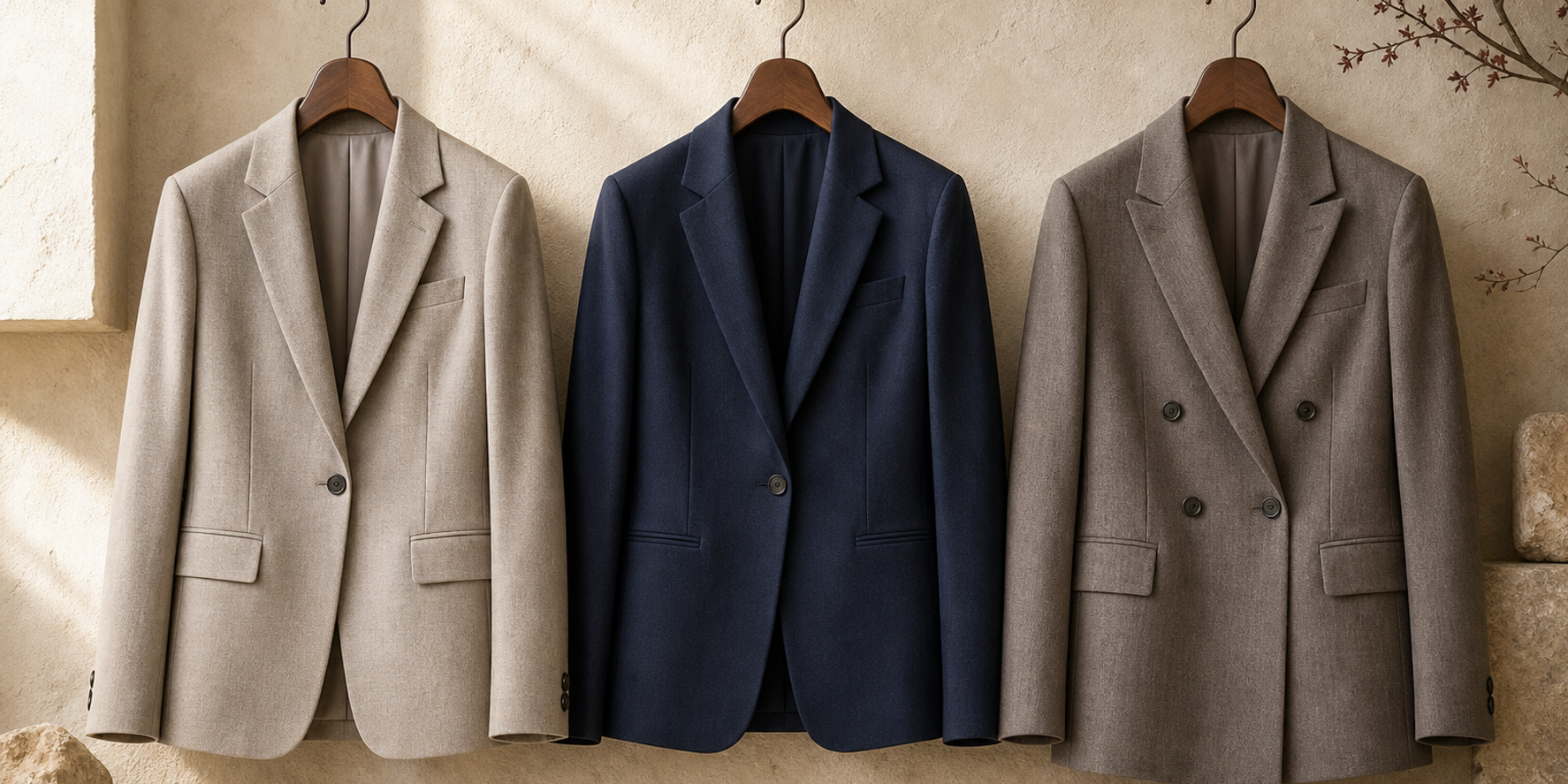
Editorial example: For this guide, garment lines can be observed through details such as seams, hems, closures, collars, pleats, and drape. These lines change how an option reads in motion and in stillness.
You can compare:
- collar shape and how it frames the neckline area
- sleeve shape and whether it looks neat under another layer
- hem length and where it ends relative to other pieces
- drape, meaning how the fabric falls and folds
- structure, meaning how much shape the garment holds on its own
Editorial example: When an outfit includes a jacket, knit, cardigan, or coat, compare how the layers sit together without treating the example as a universal rule. A garment may work beautifully on its own but feel bulky or awkward under a second layer. Another option may be less dramatic on its own but easier to combine. Neither is automatically better; they simply create different results.
If you are building outfits for work or mixed settings, this related guide may help: How to Build a Smart-Casual Work Wardrobe That Looks Coordinated and Feels Comfortable.
Decision 4: test more than one equally valid option
One of the most useful parts of a body-neutral approach is accepting that two garments can both be workable. If both options suit the occasion and allow the needed movement, the final choice can come down to smaller differences in tone, layering, or preference.
That matters because style work is often contextual rather than absolute. The sources describe wardrobe consultation as selection for specific situations, not a one-rule system. So if two items both meet the practical brief, it is reasonable to keep both in the running.
A simple way to handle this is to compare the options side by side under the same conditions:
- Wear or hold each garment in the same setting.
- Check movement in the same actions.
- Compare how each one layers.
- Note the impression each option gives.
- Choose the one that best fits the intended use.
This keeps the comparison focused on a particular context rather than declaring one option best overall.
Decision 5: choose by preference rather than correction
Preference is not an afterthought. The approved sources support gathering preferences as part of the styling process, including what a person likes and dislikes about appearance. That makes preference a legitimate input, not a personal flaw to work around.
A body-neutral comparison asks:
- Which option do I prefer to look at and wear in this context?
- Which option matches the tone I want to communicate?
- Which one feels most aligned with my taste and purpose?
Appearance also functions as non-verbal communication. A garment can signal formality, ease, polish, creativity, or restraint depending on the context. So choosing by preference is not random or shallow; it is part of deciding which message the clothing sends.
If one option suits the setting but feels off-message, the other may be the better choice. If both suit the setting and send the same message, preference can decide the tie.
A repeatable comparison checklist
Use this short checklist whenever you want to compare garment options without ranking bodies:
- Name the context. Is this for work, leisure, travel, or a more formal situation?
- List the functional needs. How much sitting, walking, reaching, or layering will the outfit need to handle?
- Compare observable garment features. Look at sleeves, hems, seams, drape, closure, and structure.
- Test movement. Move in the garment the way you would in real life.
- Check the message. Ask what each option communicates in this setting.
- Bring in preference. Which option do you like better for this purpose?
- Choose the best fit for the brief. Not the best body, but the best garment-context match.
If you want to understand the comparison process in a more detailed way, start with How to Compare Fit Options Without Ranking Bodies.
Common tradeoffs you may notice
Many garment comparisons come down to tradeoffs rather than a single winner. Here are some common ones:
| If you notice this | The tradeoff may be | |---|---| | More structure | A cleaner, more defined read, but less softness or flexibility | | More drape | A more fluid read, but less visual structure | | More room for movement | Better ease, but a looser visual line | | Closer shape | A neater line, but less room for layering | | Stronger layering compatibility | More versatility, but sometimes less impact on its own |
These tradeoffs are normal. They do not point to a correct body. They point to different garment behaviors.
Quick summary
If you want to compare garment fit options without ranking bodies, start with the situation, then compare the garment’s movement, line, layering, and communication role. Use preference as part of the decision, not as a correction problem. The most useful choice is the one that fits the context and the wearer’s stated taste.
Frequently asked questions
What does “fit” mean in a body-neutral comparison?
In a body-neutral approach, fit means how a garment behaves: its ease, movement, layering behavior, and overall suitability for the situation. It is a garment-focused assessment rather than a judgment about the wearer.
Can two different garment options both be correct?
Yes. The approved sources support selecting clothing for specific situations rather than treating one option as universally correct. If two garments both meet the context and movement needs, either may be a valid choice.
Why include appearance in the decision at all?
Because appearance can function as non-verbal communication. Different garment options can send different messages in the same setting, so the choice can reasonably include tone and impression.
How do I avoid body-ranking language when comparing options?
Focus on observable features: room through the sleeve, hem placement, drape, structure, and layering behavior. Keep the question on the garment’s function and the context, not on whether a body is better or worse suited to it.
What should I do if I like one option but the other is more practical?
Decide which factor matters more for that situation. If the setting requires practicality, that may carry more weight. If the setting is flexible, preference can become the deciding factor.
Questions readers often ask
What does “fit” mean in a body-neutral comparison?
In a body-neutral approach, fit means how a garment behaves: its ease, movement, layering behavior, and overall suitability for the situation. It is a garment-focused assessment rather than a judgment about the wearer.
Can two different garment options both be correct?
Yes. The approved sources support selecting clothing for specific situations rather than treating one option as universally correct. If two garments both meet the context and movement needs, either may be a valid choice.
Why include appearance in the decision at all?
Because appearance can function as non-verbal communication. Different garment options can send different messages in the same setting, so the choice can reasonably include tone and impression.
How do I avoid body-ranking language when comparing options?
Focus on observable features: room through the sleeve, hem placement, drape, structure, and layering behavior. Keep the question on the garment’s function and the context, not on whether a body is better or worse suited to it.
What should I do if I like one option but the other is more practical?
Decide which factor matters more for that situation. If the setting requires practicality, that may carry more weight. If the setting is flexible, preference can become the deciding factor.
Need a practical next step?
Use the checklist in this guide the next time you compare two garment options. Start with the setting, then compare movement, layering, message, and preference.
Compare fit options with the checklist