
Cardigan or Blazer? A Context-First Supporting Layer Guide
If you are comparing a cardigan and a blazer, start with the supplied context first: the setting, dress requirements, activity, and available garments. This guide shows how to compare structure, softness, movement, visual emphasis, and coordination without turning either layer into a universal best choice.
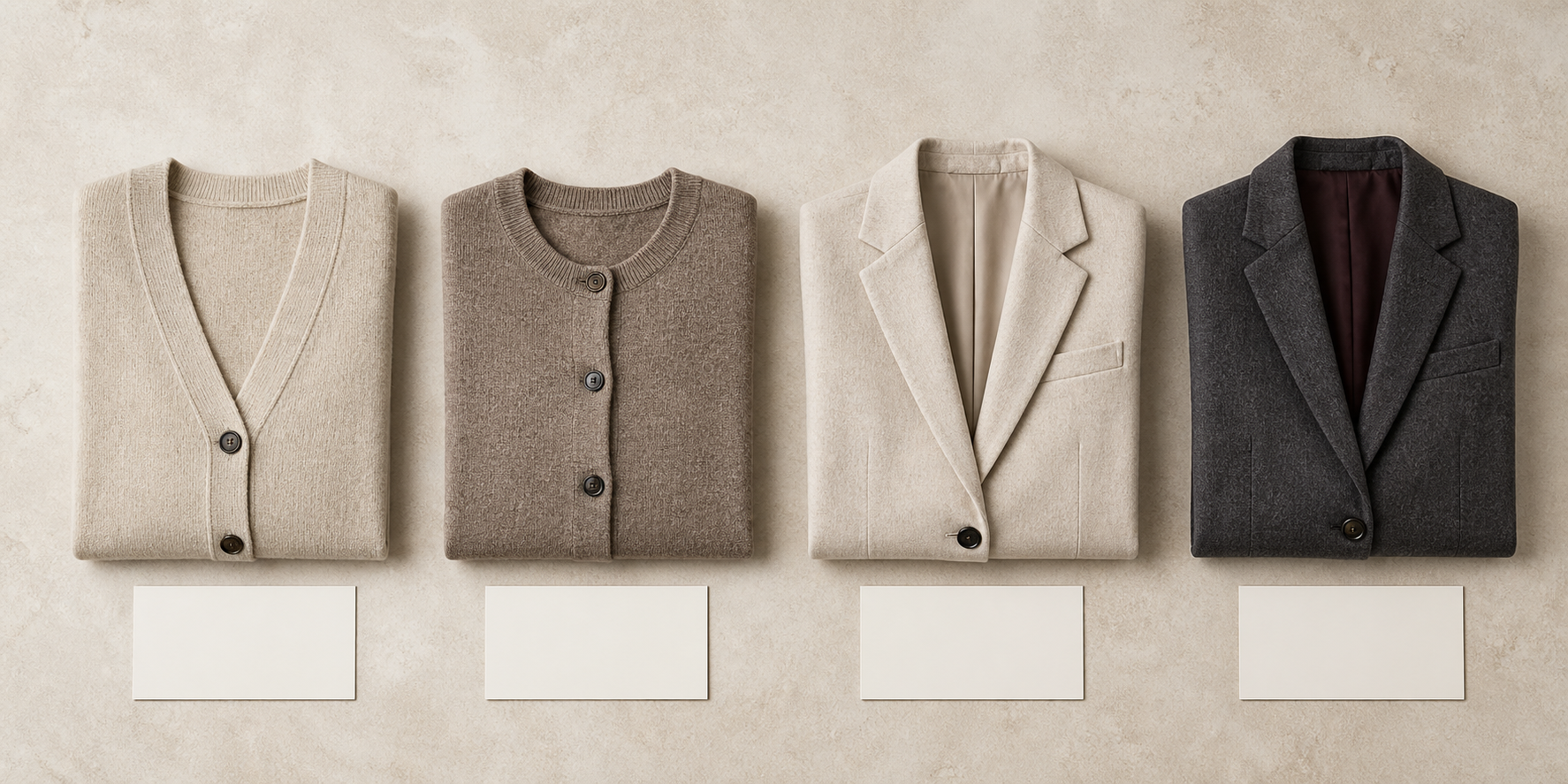
Key points
- Start with the supplied context—setting, dress requirements, activity, movement needs, and available garments—before comparing layers.
- Compare cardigan and blazer as separate observations: structure, softness, movement, visual emphasis, and coordination.
- Use conditional language and avoid universal ranking; let the final choice depend on the supplied situation and wearer priorities.
- If both layers work, record both as workable options instead of forcing a single winner.
If you are making a cardigan or blazer decision, the most useful first step is not to rank them. It is to write down the supplied context: the setting, dress requirements, activity, movement requirements, and available garments. For a practical comparison, this guide shows how to review structure, softness, movement, visual emphasis, and coordination in a simple, conditional way.
The goal is not to declare one layer better overall. It is to help you compare two workable options in the situation in front of you, then leave the final choice to the supplied context, comfort and personal preference.
What this decision guide can and cannot decide
This guide can help you compare a cardigan and a blazer in a specific situation. It cannot establish which garments are available to the reader, a workplace context, body attributes, or preferences.
That boundary matters because clothing choices are context-based. Wardrobe consultation and image guidance both point to the importance of the occasion, environment, and presentation. In other words, the question is not “Which layer wins?” but “Which layer fits the supplied situation and garments most clearly?”
A useful way to read the comparison is this: each layer can serve a different role, and the surrounding context should be the first decision point. That structure supports a neutral comparison without relying on a universal rule.
Start with the context actually supplied
Before comparing fabrics or shapes, write down the facts already provided. The source material supports starting with the setting, dress requirements, and responsibilities or tasks that the day involves. It also supports checking whether the layer matches the function of the occasion rather than treating the category alone as the answer.
A simple context note can include:
- the setting
- the stated dress requirements
- the activity or responsibilities
- any movement needs
- the available garments already named
That list is enough to begin a grounded comparison. If the context is more structured, the question becomes how each layer fits that structure. If the context is more relaxed, the question becomes how each layer sits within that lower-formality setting. The point is to compare against the supplied situation, not against a generic style ideal.
Compare structure and softness without ranking
Once the context is written down, compare the two layers as different kinds of presentation.
A blazer can be treated as the more structured option in your notes. The source material supports looking at fit, fabric quality, and shoulder fit, along with whether the blazer holds its shape. Those are practical observations, not value judgments.
A cardigan can be noted for a softer, less rigid silhouette. The casual-style source describes comfort-oriented, simplified silhouettes, which makes softness a reasonable comparison point. That does not mean softness is better; it simply means it is a distinct characteristic worth recording.
A neutral way to write the difference
- blazer: more structured presentation, with shape and fit worth checking
- cardigan: softer presentation, with a less rigid silhouette worth noting
This separation helps the comparison stay precise. You are not asking which layer is “more correct.” You are asking which layer matches the supplied context more cleanly.
Check movement and practical requirements
Movement should be checked against the day’s tasks rather than assumed from the garment category alone. The sources support considering responsibilities, selecting clothing appropriate to the occasion and function, and prioritizing the ability to move and work comfortably in the context at hand.
A practical review can ask:
- Does the layer fit the tasks described?
- Does it work with the movement needs already supplied?
- Does it stay appropriate to the setting and responsibilities?
This is where the comparison becomes useful in real life. A blazer may be the more structured note in the comparison, but structure is only helpful if it still works for the day’s function. A cardigan may be the softer note, but softness is only useful if the layer still suits the stated context.
Review the relationship with available garments
Coordination matters because both sources describe layering and pairing with other pieces as part of outfit building. The blazer source notes that a blazer can be paired with blouses, dresses, or pants and layered with lightweight tops. The casual-style source also supports combining pieces from different style directions.
That means the comparison should include the garments already supplied.
Ask:
- Which layer pairs more directly with the listed garments?
- Which option keeps the outfit coherent in the stated setting?
- Which one works more naturally with the available pieces already named?
This step keeps the guide grounded in what is actually available rather than in imagined outfit-building.
A simple coordination test
- If the supplied garments are more tailored, note which layer aligns with that direction.
- If the supplied garments are more relaxed, note which layer fits that tone more naturally.
- If both could work, record both as workable and let the final choice remain conditional.
Use a neutral decision table
A decision table can make the comparison easier to read. The sources support separating structure, softness, movement, visual emphasis, and garment coordination into distinct observations rather than collapsing everything into one label.
| Comparison point | Cardigan note | Blazer note | |---|---|---| | Structure | Softer, less rigid silhouette | More structured presentation; check fit and shoulders | | Softness | Softness is a defining observation | Usually less soft in presentation than a cardigan note | | Movement | Check against the day’s tasks | Check against the day’s tasks | | Visual emphasis | More relaxed or understated presentation | More structured presentation; presentation can appear more defined | | Coordination | Check pairing with the supplied garments | Check pairing with the supplied garments |
This table does not rank either layer. It simply separates the things you need to compare.
Editorial examples of conditional comparison notes
The examples below are not rules. They are editorial examples of how to write a comparison note once the context has been supplied.
Editorial example: If the supplied setting is a structured work environment and the available garments include a blazer and tailored trousers, the note can say that the blazer adds structure and pairs directly with the supplied pieces.
Editorial example: If the supplied setting is a relaxed everyday context and the available garments include a cardigan and a simple top, the note can say that the cardigan reads as softer and less rigid in that outfit combination.
Editorial example: If the supplied activity requires frequent movement, the note can focus on whether either layer stays practical for those tasks, without assuming the result in advance.
Editorial example: If the supplied garments already include a dress, the note can ask which layer coordinates more directly with that dress in the stated context.
These examples are useful because they show how to stay conditional. They do not claim that one layer is always the answer.
Common mistakes in cardigan-versus-blazer comparisons
A good comparison can go off track in a few predictable ways.
1. Starting with assumptions
Do not begin by assuming that one layer is always more formal, more polished, or more suitable. The evidence supports context-first comparison, not universal ranking.
2. Turning visual differences into personal claims
Visual emphasis can be described as a difference in presentation. It should not be turned into a claim about confidence, authority, success, or similar outcomes. The image guidance supports appearance as non-verbal communication, which is enough for a neutral clothing comparison.
3. Ignoring the supplied garments
When specific available pieces are supplied in the context, compare each layer with that stated list. Coordination is part of outfit building, not a separate afterthought.
4. Treating comfort as a rule instead of a wearer priority
Comfort matters, but this guide does not turn comfort into a universal rule or an assumption. Leave it as a wearer priority to be recorded, not an author conclusion.
A reusable supporting-layer checklist
Use this checklist whenever you need to compare a cardigan and a blazer in a specific setting.
- Write the supplied setting.
- Write the dress requirements.
- Write the activity or responsibilities.
- Write the movement needs.
- Write the available garments already named.
- Compare structure and softness separately.
- Check movement against the day’s tasks.
- Check coordination with the supplied garments.
- Note visual emphasis in neutral language.
- Keep the final choice conditional on the supplied context and wearer priorities.
If you want a broader framework for layer choice, you may also find this related guide useful: A Context-First Checklist for Choosing What to Wear.
For more outfit-building context, see Versatile Layers for a Smart-Casual Wardrobe.
A concise way to record two workable options
When both layers seem plausible, write two short notes instead of forcing a winner.
- Option A: the cardigan fits the supplied context because of its softer presentation and coordination with the listed pieces.
- Option B: the blazer fits the supplied context because of its structure, shape, and pairing with the listed pieces.
Then add the final line: the choice stays open until the wearer’s priorities are applied to the supplied situation.
That method is useful because it keeps the comparison honest. It lets you record more than one workable answer without pretending the decision is universal.
Summary
The cleanest way to compare a cardigan and a blazer is to start with context, not category. Write down the setting, dress requirements, activity, movement requirements, and available garments first. Then compare structure, softness, movement, visual emphasis, and coordination as separate observations. If both layers work, keep both notes and let the final choice remain conditional.
Frequently asked questions
What should I write down first when comparing a cardigan and blazer?
Start with the supplied context: setting, dress requirements, activity, movement needs, and available garments. The sources support treating the environment and function as the first decision point.
How do I compare structure and softness fairly?
Record them as separate observations. A blazer can be noted for structure, fit, fabric quality, and shoulder fit. A cardigan can be noted for a softer, less rigid silhouette.
Can I compare visual impression without making it a personality claim?
Yes. Visual emphasis can be described as presentation. The image guidance supports treating appearance as a form of non-verbal communication without turning it into a claim about confidence or success.
What if both layers seem workable?
Write both as workable options and leave the final choice conditional on the supplied context and the wearer’s priorities. The source-backed method supports comparison without a universal winner.
Questions readers often ask
What should I write down first when comparing a cardigan and blazer?
Start with the supplied context: setting, dress requirements, activity, movement needs, and available garments. The sources support treating the environment and function as the first decision point.
How do I compare structure and softness fairly?
Record them as separate observations. A blazer can be noted for structure, fit, fabric quality, and shoulder fit. A cardigan can be noted for a softer, less rigid silhouette.
Can I compare visual impression without making it a personality claim?
Yes. Visual emphasis can be described as presentation. The image guidance supports treating appearance as a form of non-verbal communication without turning it into a claim about confidence or success.
What if both layers seem workable?
Write both as workable options and leave the final choice conditional on the supplied context and the wearer’s priorities. The source-backed method supports comparison without a universal winner.
Explore the next step in Smart Wardrobe
If you want to continue with a calm, context-first comparison, visit the existing Smart Wardrobe page for a related guide.
Open Smart Wardrobe