
How to Adapt a Work Outfit for an After-Work Event
A context-led way to compare a work outfit with a separate after-work setting, then make small, conditional changes using accessories, footwear, or one outer layer at a time.
Key points
- Start with the work setting and the after-work event as separate contexts.
- Use the supplied environment and occasion, not a universal formula, to judge the outfit.
- Make one visible change at a time when an adjustment is needed.
- Treat accessories and footwear as optional refinement tools.
- Label specific outfit pairings as editorial examples, not rules.
Start with two separate contexts
A useful way to approach how to adapt a work outfit for an after-work event is to treat the work setting and the event setting as two different inputs. The approved sources emphasize that styling depends on the environment and the occasion, so the first step is not to assume one outfit works identically everywhere.
That means the question is not simply, “Is this outfit good or bad?” It is closer to: what does the work context call for, what does the after-work context call for, and what visible changes are needed between the two?
Because the sources also stress assessing dress code and setting rather than presuming them, any workplace or event rule should come from the user-supplied context, not from a universal formula.
Identify what already fits both settings
Once the two contexts are separated, compare the current outfit against both. Look at coordination, formality, and simplicity rather than trying to force a single fixed solution.
The approved sources support a baseline built from neutral colors, modest silhouettes, and simple classic pieces, while still leaving room for subtle personal expression. In practice, that means an outfit may already be close to both settings before any adjustment is made.
Core business pieces named in the sources include:
- blazers
- button-up shirts
- tailored trousers
- pencil skirts
- sheath dresses
- pumps
- loafers
- flats
Those items are not universal rules for every situation. They are coordination options supported by the sources, and they should still be checked against the exact work and event contexts supplied by the reader.
Adjust one visible element at a time
The sources support small changes rather than a full overhaul. A practical method is to adjust one visible element first, then reassess whether anything else needs to change.
That visible element might be:
- an accessory
- a shoe choice
- an outer layer
This keeps the method editorially cautious and context-led. It also avoids turning the advice into a rigid formula, which the sources do not support.
A one-step change is often the cleanest way to test whether the outfit still matches both settings. If the first change works, no further change may be necessary. If it does not, the next adjustment can be made with the same careful approach.
Use accessories and footwear as optional coordination tools
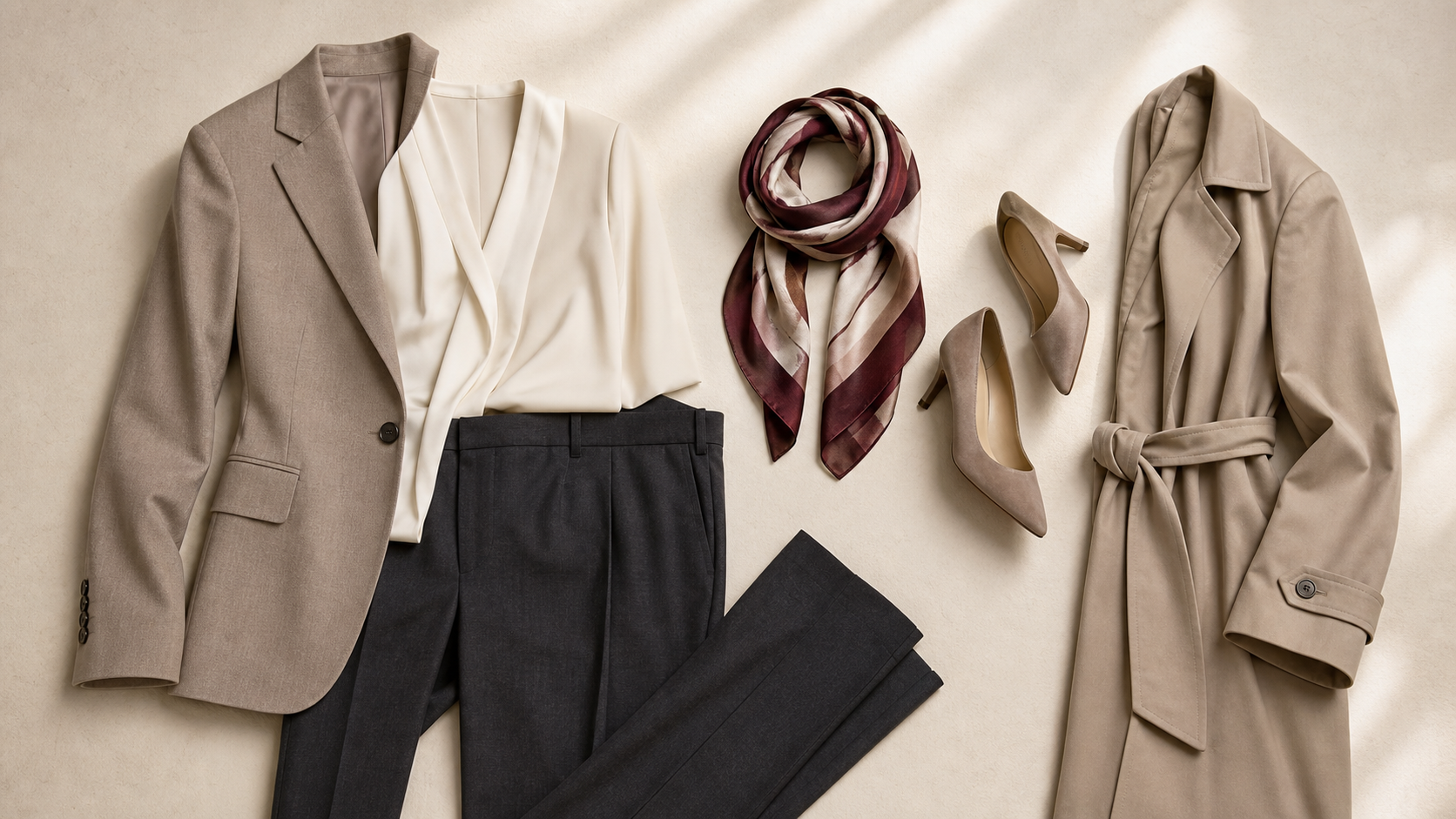
Accessories are optional coordination tools, not required steps. The sources include watches, statement jewelry, structured handbags, and scarves as examples of pieces that can refine a look without changing the entire outfit.
Footwear can work the same way. The approved sources name pumps, loafers, and flats as classic business options, which means shoe choice can be part of the coordination process when the user-supplied context calls for it.
The point is not to create a universal rule about which accessory or shoe belongs in which setting. The point is to make a small, visible adjustment that aligns with the two contexts already supplied.
Keep workplace and event rules external to the guide
The sources say dress code and setting should be assessed, not presumed. That is why workplace or event rules should stay outside the article unless the reader provides them.
A helpful workflow is:
- Review the work outfit in its own context.
- Review the after-work event in its own context.
- Check whether any external rule has been supplied.
- Change only one visible element if coordination needs to shift.
This structure keeps the guidance accurate and avoids claiming that any look is always office-appropriate or always event-appropriate.
Editorial examples of work-to-event adaptations
The combinations below are editorial examples only. They illustrate how the sources’ coordination principles can be applied; they are not universal rules.
- Editorial example: a blazer with a simple blouse and tailored trousers, then one accessory change for the event.
- Editorial example: a sheath dress with a switch from one shoe choice to another, if the user-supplied contexts call for it.
- Editorial example: a classic shirt-and-skirt combination with a scarf added or removed as a small coordination change.
- Editorial example: a neutral outfit with a structured bag kept for the work setting and reconsidered for the event setting.
- Editorial example: a modest, classic business look carried into an after-work setting with only one visible element adjusted.
These examples reflect the sources’ emphasis on mix-and-match wardrobe elements, subtle updates, and classic business pieces. They should still be checked against the exact outfit and the exact event the reader has supplied.
Compare the smallest useful transition
Context-led adaptation starts with user-supplied garments and two separately described settings. First, note the work outfit exactly as supplied: the main garment pieces, footwear, accessories, and any outer layer. Then note the after-work event as a separate context. This does not decide what anyone should wear. It simply keeps the comparison tied to information the reader has actually provided.
Next, identify which elements can remain unchanged. The approved sources support classic business pieces and simple coordination, so a blazer, shirt, tailored trousers, skirt, dress, pumps, loafers, or flats may already work as part of the supplied outfit. Their presence does not establish a dress code. The relevant question is whether the reader's stated work and event requirements allow the same base piece in both settings.
Only after that comparison should optional coordination tools be considered. Accessories, footwear, and an outer layer can each provide one visible adjustment. Review one category at a time:
- Keep the base garments fixed and compare one accessory option.
- Keep the clothing and accessories fixed and compare one footwear option.
- Keep the rest of the outfit fixed and compare one outer-layer option.
These are comparison steps, not instructions to buy, own, add, or remove anything. If the first option supplies the intended degree of change for both stated contexts, the review can stop there. If it does not, return to the supplied details and compare one different element rather than assuming a full outfit change is needed.
This sequence preserves the supported principle of small, visible adjustments. It also makes the boundary clear: the guide can organise a comparison, but workplace rules, event expectations, personal preferences, and the final decision remain external inputs supplied by the reader.
Avoid universal formality and social-outcome rules
It can be tempting to turn outfit guidance into a promise about what will look right in every situation or what outcome it will create. The approved sources do not support that kind of claim.
Instead, the safer and more accurate approach is to keep the guidance conditional:
- the outfit is reviewed against the supplied work setting
- the event is reviewed as a separate setting
- the final choice depends on the context provided
- the result is an example, not a guarantee
This also means avoiding language that implies confidence, authority, competence, or social success as a direct result of a clothing choice.
A body-neutral transition checklist
Use this checklist as a simple way to move from work to after-work context without making assumptions about the wearer:
- What is the work setting that has been supplied?
- What is the after-work event that has been supplied?
- What external rules, if any, have been supplied for either setting?
- Which part of the outfit already fits both contexts?
- Which single visible element would be the first reasonable change?
- Would an accessory, shoe choice, or outer layer be the smallest useful adjustment?
- If you make one change, does the outfit still match the earlier context?
- Are any further changes still editorially necessary, or is the first change enough?
This checklist keeps the focus on coordination, occasion, and degree of change, rather than on body features or personal assumptions.
Related guidance
If you want another context-led comparison, you may also find these guides useful:
- Smart-Casual Work Wardrobe: How to Look Coordinated and Comfortable
- How to Repeat Outfits at Work Without Feeling Boring
FAQ
How do I start if I only have one work outfit in mind?
Start by comparing that outfit against the work setting and the after-work setting separately. The sources support assessing the environment and occasion before making any change, so begin with context rather than with a fixed styling formula.
What should I change first?
A good first move is to adjust one visible element at a time, such as an accessory, a shoe choice, or an outer layer. The sources support incremental changes and mix-and-match coordination rather than a full redesign.
Are accessories required for a work-to-event change?
No. Accessories are optional coordination tools. They can add a small style shift, but the sources do not treat them as mandatory.
Can I treat one outfit combination as universally correct?
No. The sources support context-led styling, not universal office or event rules. The same outfit should be checked against the specific work and event settings supplied by the reader.
Why label combinations as editorial examples?
Because the sources provide broad coordination principles and example items, not fixed formulas. Labeling combinations as editorial examples keeps the article accurate and makes it clear that specific pairings are illustrations rather than rules.
Questions readers often ask
How do I start if I only have one work outfit in mind?
Compare that outfit against the work setting and the after-work setting separately. The sources support assessing the environment and occasion before making any change.
What should I change first?
A practical first step is to adjust one visible element at a time, such as an accessory, a shoe choice, or an outer layer.
Are accessories required for a work-to-event change?
No. Accessories are optional coordination tools that can add a small style shift without changing the whole outfit.
Can I treat one outfit combination as universally correct?
No. The sources support context-led styling, so the same outfit should be checked against the specific work and event settings supplied by the reader.
Why label combinations as editorial examples?
Because the sources provide broad coordination principles and example items rather than fixed formulas, so specific pairings should be treated as illustrations.
Need a calm way to compare two contexts?
Smart Wardrobe can help compare a work outfit and after-work setting using only details the reader explicitly supplies, while keeping the decision process context-led.
Explore Smart Wardrobe