 By
·
6 minute read
By
·
6 minute read
Best Colors for My Skin Tone: Stop Wearing Shades That Age You
Published • Updated
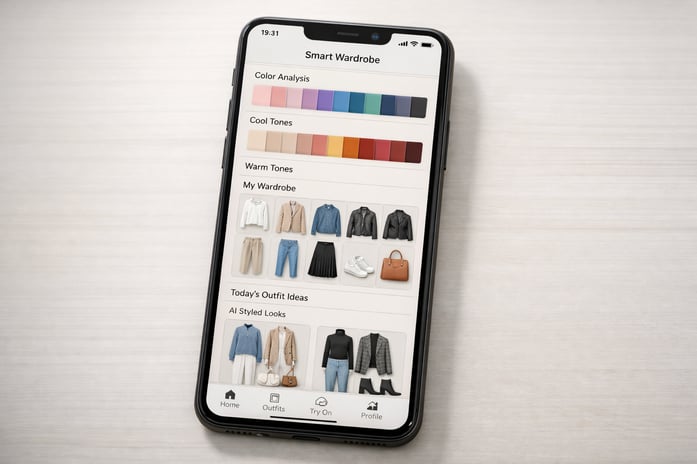
The best colors for my skin tone are the ones that match my undertone and keep strong, healthy contrast near my face. In most wardrobes, you can fix 80% of the “I look tired” problem by changing just 3 things: the top color, the neckline color, and the lipstick shade.
Table of contents
- Cool vs warm tone: what you actually need to know
- 3 quick undertone tests you can trust
- Which colors age your face and why
- Best colors by undertone (table)
- Digital color matching: how color analysis online works
- How to do a color check inside Smart Wardrobe
- Turn your palette into a capsule wardrobe that always matches
- Frequently asked questions
Cool vs warm tone: what matters most?
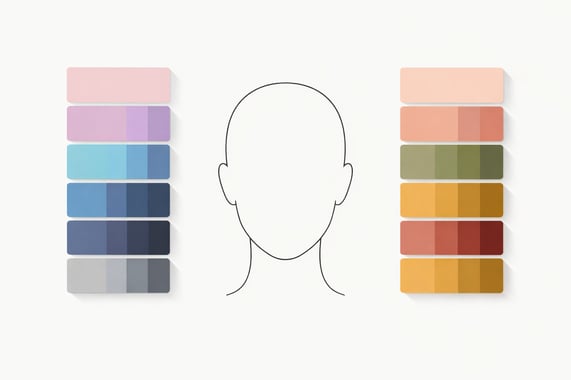
Undertone is the temperature under your skin, and it decides whether a color makes you look fresh or slightly gray. You can have light skin or deep skin and still be cool, warm, or neutral. This is why two people can wear “the same beige” and one looks glowing while the other looks like they slept 3 hours.
Cool undertone in real life
- Skin can show pink, red, or bluish nuance (even if you tan).
- Silver jewelry often looks crisp and “expensive” on you.
- Best near-face colors often include berry, true navy, emerald, cool rose.
Warm undertone in real life
- Skin can show golden, peach, or yellow nuance (even if you burn easily).
- Gold jewelry often looks radiant and natural on you.
- Best near-face colors often include coral, warm teal, tomato red, olive, cocoa.
How can I find my undertone in 3 minutes?
Use 2 tests in daylight and trust the result that repeats twice. One test can lie. Two tests agreeing is usually enough to make better shopping decisions today, not “someday.”
Test 1: jewelry test (30 seconds)
- Hold silver on one side of your face, gold on the other.
- If silver makes skin look clearer, you likely lean cool.
- If gold makes skin look healthier, you likely lean warm.
Test 2: white paper test (45 seconds)
- Stand near a window. Hold plain white paper under your chin.
- If your skin looks pinker, you likely lean cool.
- If your skin looks more golden, you likely lean warm.
Test 3: “best friend color” test (2 minutes)
- Pick 2 tops: one cool (true blue) and one warm (coral).
- Try them on in daylight and take 2 selfies (front and side).
- Choose the one that reduces shadows under eyes and around mouth.
If you want less guessing, this is where color analysis online helps: you can run the same logic with consistent guidance and save the result for later use.
Which colors make your face look older and tired?
Colors “age” you when they lower your facial contrast and amplify shadows, redness, or dullness. It is not about the color being ugly. It is about the color sitting too close to your skin temperature or being too muted for your natural contrast level.
4 common “age-adding” color traps
- Muddy neutrals (dusty beige, drab gray, dull olive) flatten the face and mute eyes.
- Extreme black or stark white at the neckline can carve out shadows and highlight fine lines.
- Icy pastels (washed-out lilac, pale pink, baby blue) can emphasize under-eye darkness.
- Wrong red can pull redness forward: orange-red often clashes with cool undertones, blue-red can look harsh on very warm undertones.
A quick rule that works in the mirror
If a color makes you want more concealer, it is not your best near-face color. Keep that shade for bottoms, shoes, or bags, and swap your top layer to a more flattering temperature.
Want to go deeper on why this works? Start with our color theory blog and then come back to build your wearable palette.
What are the best colors for my skin tone by undertone?
Start with 8 to 12 “near-face” colors that repeat across outfits, then build neutrals around them. This is the fastest path to looking fresher without buying a whole new wardrobe.
Undertone cheat sheet (table)
| Undertone | Best near-face colors (examples) | Safer neutrals | Colors to test carefully |
|---|---|---|---|
| Cool | True navy, emerald, berry, cool rose, cobalt, blue-based red | Charcoal, crisp white, cool taupe, ink blue | Mustard, orange, yellow-beige |
| Warm | Coral, warm teal, tomato red, olive, terracotta, golden green | Cream, warm beige, cocoa, warm navy | Icy pastels, blue-based fuchsia |
| Neutral | Medium teal, rose, true red, soft navy, balanced green | Soft white, medium gray, cocoa, balanced taupe | Very warm orange, very icy lilac |
Make it practical: your 12-color starter palette
- Pick 4 neutrals (2 light, 2 dark).
- Pick 6 “glow colors” that brighten your face.
- Pick 2 accent colors for lipstick, scarf, or earrings.
How does digital color matching work in color analysis online?
Digital color matching uses a well-lit selfie to estimate undertone, contrast, and depth, then suggests a usable palette. You still need decent lighting, but once you have it, the process is repeatable, fast, and easy to store for shopping.
Why apps beat guessing in fitting rooms
- You can test 10 colors in 2 minutes, not 10 stores in 2 weekends.
- You can save your palette and reuse it for makeup, hair color, and clothes.
- You reduce “return pile” purchases by checking temperature first.
Lighting rules for accurate results (no drama)
- Stand near a window with indirect daylight.
- Turn off strong yellow bulbs to avoid warm cast.
- Remove heavy filters and avoid beauty mode.
- Take 2 photos: front-facing and slightly angled (about 15 degrees).
If you like reading the theory behind palettes, Pantone is a solid place to explore color language: Pantone Color Institute. For a clear explanation of basic hue and contrast concepts, this is also helpful: Color Matters.
How can Smart Wardrobe help me find my best colors?
Smart Wardrobe: Style & Try-On helps you run color analysis, save palettes, and plan outfits around those colors. This matters because results are only useful if you can apply them, and the app is built for daily wardrobe decisions plus features like outfit planning and virtual try-on.

A simple in-app workflow you will actually use
- Take a clean selfie in daylight (no filters, no yellow bulbs).
- Run the color analysis and save your result as your baseline palette.
- Create a mini capsule: 4 neutrals + 6 glow colors + 2 accents.
- Plan 7 outfits that use at least 2 colors from your palette each day.
Ready to stop guessing and start matching? Download Smart Wardrobe: Style & Try-On and try the color analysis now.
If you are building outfits inside the same app, you avoid the classic trap: a “perfect palette” you never use because it is not connected to your wardrobe.
How do I turn my palette into outfits that always work?
A palette becomes wearable when you limit your neutrals and repeat your best near-face colors across multiple outfits. This is where most people win: not by finding 50 perfect colors, but by repeating 12 colors with intention.
The 3-2-1 outfit formula (easy and reliable)
- 3 neutrals max in your core wardrobe (example: navy, cream, cocoa).
- 2 glow colors near the face per outfit (top + accessory, or top + lipstick).
- 1 accent for personality (earrings, bag, shoes).
Second table: outfit planning by undertone (table)
| Undertone | Fast outfit combo | Swap that prevents “tired face” |
|---|---|---|
| Cool | Navy top + charcoal bottom + berry accent | Swap beige top for crisp white or cool rose |
| Warm | Cream top + olive bottom + coral accent | Swap icy pastel for warm teal or terracotta |
| Neutral | Soft white top + cocoa bottom + medium teal accent | Swap extreme black at neckline for softer navy or cocoa |
Internal links to help you go further
Frequently asked questions
How can I tell if my skin tone is cool or warm at home?
Use daylight plus the jewelry and vein test for a quick answer. Silver and blue-based colors usually flatter cool undertones; gold and yellow-based colors usually flatter warm undertones. If your result repeats in 2 tests, trust it.
Why do some colors make my face look older?
They reduce contrast and emphasize shadows around eyes and mouth. Muddy neutrals and icy pastels are common culprits. A simple fix is moving the tricky shade away from your face by 10 to 20 cm.
Is color analysis online accurate?
It can be very accurate if your photo lighting is clean and consistent. Use indirect daylight, avoid mixed lighting, and take 2 photos (front and 15 degree angle). Then confirm with a 3 to 5 color mirror test.
What if I am neutral and everything seems to work?
Neutral usually means temperature is flexible, but depth and clarity still matter. Choose balanced shades like soft navy, medium teal, rose, and cocoa. Avoid extremes that wash you out.
Can I wear black without looking tired?
Yes, just soften it near your face and add a glow color. Try charcoal or ink navy instead of pure black, and add 1 brighter accent (berry, teal, coral) close to the face.
How does Smart Wardrobe support digital color matching?
It helps you run color analysis, save palettes, and use them in outfit planning. You can build color capsules and keep your wardrobe consistent, plus use features like outfit planning and virtual try-on to test looks before buying.
What is the fastest way to pick a flattering top color today?
Choose a color that brightens the whites of your eyes and reduces under-eye shadow. Test 3 tops in daylight (one neutral, one cool, one warm). Keep the winner closest to your face.
What should I do next if I want a younger-looking color palette?
Pick your undertone, build a 12-color starter palette, and repeat it across outfits for 7 days. If you do that, you will feel the difference instantly: easier shopping, fewer “why do I look tired?” mornings, and a wardrobe that finally looks intentional.
Try it now: run the color analysis inside Smart Wardrobe and save your palette.