 By
·
2 minute read
By
·
2 minute read
Color Theory in Fashion: Match Colors Like a Stylist
Color theory is the fastest way to make your outfits look expensive without buying anything new. When colors are intentional, you look cleaner, brighter, and more elegant. When colors are random, even luxury items can look messy.
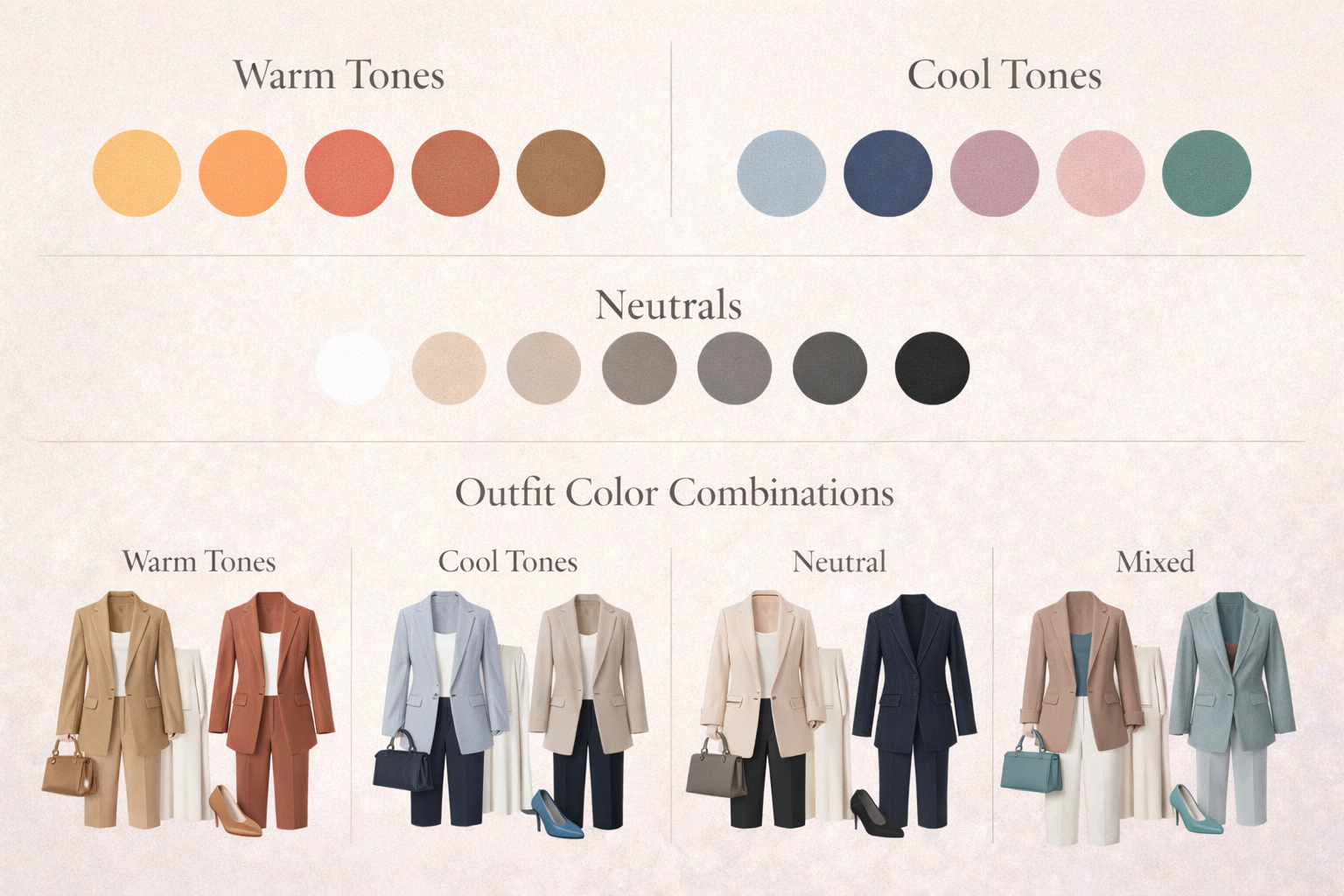
What is color theory in fashion?
Color theory is a practical system for combining colors so your outfit looks harmonious. In real life, it comes down to five things: undertone, warm vs cool, contrast, neutrals, and simple color formulas.
1) Undertone: the hidden base of your skin
Your undertone is not your skin depth. It is the base tone under the skin.
- Cool undertone: pink, red, or bluish base
- Warm undertone: golden, yellow, or olive base
- Neutral undertone: a mix of both
If you want the full system, use this page: Color Analysis Guide.
2) Warm vs cool colors
Warm colors feel earthy and sun-based. Cool colors feel icy and blue-based.
Warm examples
Camel, cream, warm beige, rust, tomato red, olive, mustard.
Cool examples
Crisp white, cool grey, navy, cobalt, berry, emerald, icy pink.
3) Contrast level: why some outfits feel too loud or too dull
Contrast is the difference between your hair, eyes, and skin. It changes how bold your best outfits can be.
- Low contrast: softer combinations look best (tonal, muted, light to medium)
- High contrast: sharper combinations look great (black and white, navy and ivory, bold accent colors)
4) Neutrals: your elegant wardrobe foundation
Neutrals are the backbone of a stylish wardrobe. Pick 2 to 3 neutrals and you will instantly reduce chaos.
- Ivory and cream
- Beige and taupe
- Grey
- Navy
- Chocolate
- Black (best when it flatters your contrast)
Want a closet that always matches? Start here: Capsule Wardrobe.
5 outfit color formulas that always work
1) Neutral + one color
Example: navy + cream, beige + chocolate, grey + burgundy.
2) Monochrome
Same color family head to toe. Looks expensive fast. Example: all beige, all navy, all grey.
3) Tonal
One color in different depths. Example: cream + camel + chocolate.
4) Complementary, but softened
Opposites on the color wheel, but not neon. Example: navy + warm rust, olive + soft berry.
5) Accent color only in accessories
Neutral outfit, one accent in bag or shoes. This is the easiest elegant upgrade.
Color theory for women 35+: the elegance rule
After 35, your best colors are the ones that brighten your face. The wrong color creates shadows. The right color makes you look rested even on a hard week.
Use color theory with body shape and wardrobe structure
Color is powerful, but it becomes unstoppable when combined with fit and structure:
Digitize your wardrobe and test color combinations
When your wardrobe is digitized, you can test color combinations faster, save your best outfits, and avoid duplicate shopping.
Try Smart Wardrobe: Style & Try-On: Download on Google Play.
Conclusion
Color theory is not a fashion rulebook. It is a shortcut to looking polished. Pick your neutrals, respect undertone and contrast, and use simple formulas. That is how you look elegant on purpose.