
How to Layer Skincare Products: A Calm, Simple Order Guide
A practical guide to layering skincare in a thin-to-thick sequence, finishing morning routines with sunscreen, and introducing new products more carefully.
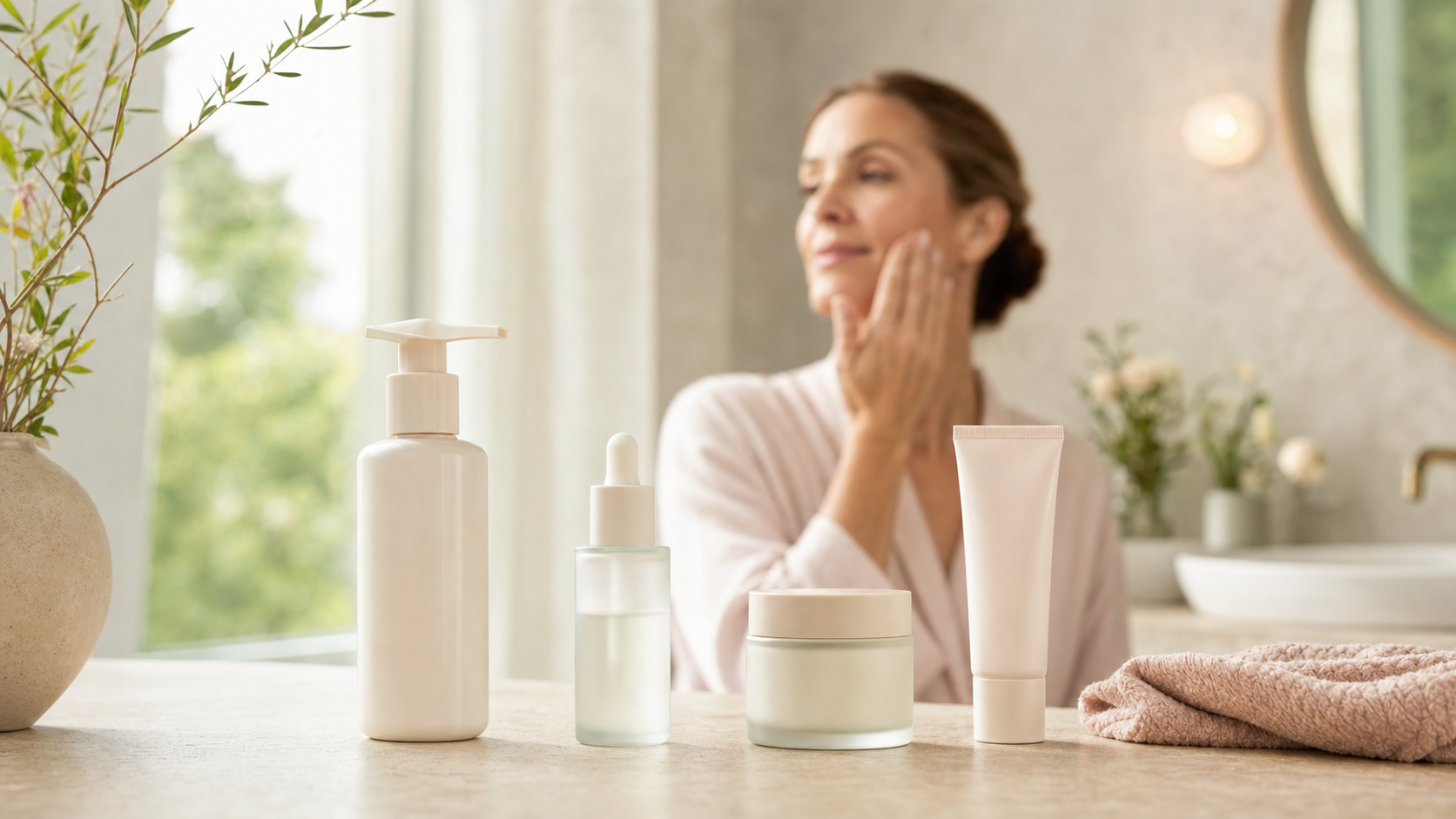
Key points
- A common evidence-based layering rule is to apply skincare from thinnest to thickest consistency.
- In the morning, sunscreen should be the final step.
- Patch testing new products can help check for irritation before wider use.
- The provided registry does not support detailed KLAPP-specific layering instructions.
- Product labels and intended use should guide any product-by-product routine.
Why skincare order matters
When people ask how to layer skincare products, the most reliable general rule is to apply products from thinnest to thickest consistency. That approach gives lighter products a chance to be absorbed before heavier ones are added.
This is a useful starting point for both simple and more detailed routines. It does not mean every routine must look identical, but it does provide a sensible structure when you are deciding what goes first and what comes later.
A simple cosmetic routine can also start with cleansing, then move to a treatment step such as a serum or concentrate, and end with a finishing product if you use one.
Morning routine: finish with sunscreen
In a morning routine, sunscreen should be the final step. The general reason is straightforward: sunscreen is meant to sit on top of the rest of the routine, after moisturizer or other skincare layers.
A calm morning sequence might look like this:
- Cleanse, if needed
- Apply a serum or concentrate
- Use moisturizer or another care step, if part of your routine
- Apply sunscreen last
If your routine is very minimal, that is fine too. The key point is that sunscreen belongs at the end of the morning routine rather than before other layers.
For readers who want a broader routine reference, see our guide to Skincare Routine for Mature Skin After 40.
How to introduce new products safely
When you add a new skincare product, a cautious approach is to patch test it first. Patch testing helps you check whether your skin shows signs of irritation before you use the product more widely.
That does not guarantee the product will suit every situation, but it is a practical way to reduce unnecessary irritation when you are changing your routine.
A few simple habits can also help keep the routine manageable:
- Add one new product at a time
- Keep the first routine small rather than adding many layers at once
- Watch for redness, stinging, or other signs that a product may not agree with your skin
- If irritation persists or feels severe, seek professional advice rather than trying to troubleshoot endlessly on your own
If you are exploring hydration-focused products, you may also find our overview of Hyaluronic Acid in Skincare helpful.
What we can and cannot confirm for KLAPP
The source registry provided for this topic supports general layering guidance, but it does not include enough KLAPP-specific evidence to set out a full brand-specific layering routine.
That means the safest advice is to stay with the general order principle and verify any product-by-product routine against the product label and intended use. Product order can vary slightly depending on formula, texture, and the instructions given for a particular item.
The registry also includes a broader regulatory reminder: cosmetic products in the EU are covered by a safety and labelling framework. That is part of why label instructions matter, especially when a routine includes several different cosmetic formats.
One more important boundary: the source registry includes both home-use and professional-use products, and those should not be mixed into the same home routine advice. If a product is marked for professional use, it should be treated as such.
A simple way to think about layering
If you want a low-stress rule of thumb, keep it this simple:
- Start with cleansing
- Add treatment-type products such as serums or concentrates
- Finish with cosmetic products that belong at the end of the routine
- Use sunscreen last in the morning
That is usually enough to build a tidy routine without overcomplicating it.
For women who prefer a more polished but still practical routine, a small number of well-chosen steps is often easier to keep consistent than a long sequence of layers.
How to reduce irritation
The most useful irritation-avoidance step is usually not adding more products — it is adding them more carefully.
Patch testing new products, introducing them one at a time, and keeping the routine aligned with the product label can all make layering feel more predictable. If your skin becomes sensitive, a simpler routine is often easier to tolerate than a crowded one.
FAQ
Does skincare always need to go from thin to thick?
A common evidence-based approach is to apply products from thinnest to thickest consistency. It is a practical general rule, although product texture and label instructions can still affect the final order.
Why is sunscreen the last step in the morning?
Sunscreen is usually applied last so it sits on top of the rest of the morning routine. That is the order recommended in general dermatology guidance.
Should I patch test every new product?
Patch testing is a sensible way to check for irritation before wider use of a new product. It is especially useful when you are unsure how your skin will respond.
Can I use KLAPP source material to build a full product-by-product routine?
Not from the provided registry alone. The available source set does not contain enough KLAPP-specific product instruction to support a detailed brand-only layering plan, so each product should be checked against its own label and intended use.
Can a professional-use product be added to a home routine?
No routine advice here should treat a professional-use product as a home-use step. Professional-use products belong in a professional context, not in general at-home layering guidance.
Final takeaway
If you want a steady, practical answer to how to layer skincare products, start with the simplest rule: cleanse first, apply lighter textures before heavier ones, and finish your morning routine with sunscreen. Add new products slowly, patch test where appropriate, and check the label whenever a product has its own instructions.
Questions readers often ask
Does skincare always need to go from thin to thick?
A common evidence-based approach is to apply products from thinnest to thickest consistency. It is a practical general rule, although product texture and label instructions can still affect the final order.
Why is sunscreen the last step in the morning?
Sunscreen is usually applied last so it sits on top of the rest of the morning routine. That is the order recommended in general dermatology guidance.
Should I patch test every new product?
Patch testing is a sensible way to check for irritation before wider use of a new product. It is especially useful when you are unsure how your skin will respond.
Can I use KLAPP source material to build a full product-by-product routine?
Not from the provided registry alone. The available source set does not contain enough KLAPP-specific product instruction to support a detailed brand-only layering plan, so each product should be checked against its own label and intended use.
Can a professional-use product be added to a home routine?
No routine advice here should treat a professional-use product as a home-use step. Professional-use products belong in a professional context, not in general at-home layering guidance.
Sources and references
- Should I apply my skin care products in a certain order? - American Academy of Dermatology Association
- How to test skin care products - American Academy of Dermatology Association
- Should I apply my skin care products in a certain order? - www.aad.org
- KLAPP Skincare Finland | Healthy & Elegant - klapp.fi
- Regulation - 1223/2009 - EN - Cosmetic Products Regulation - EUR-Lex - eur-lex.europa.eu
- Dermatologist-recommended skin care for your 20s - www.aad.org
Explore KLAPP Finland
If you want to compare routines or product categories, start by reviewing the label instructions and approved product information for the items you use.
Explore KLAPP Finland