
Hyaluronic Acid in Skincare: What It Is, What It Can Do, and How to Use It
Hyaluronic acid is a cosmetic moisturising ingredient that helps bind water, supports a smoother-looking skin surface, and fits easily into a simple routine. Here is what to expect from it—and what not to expect.
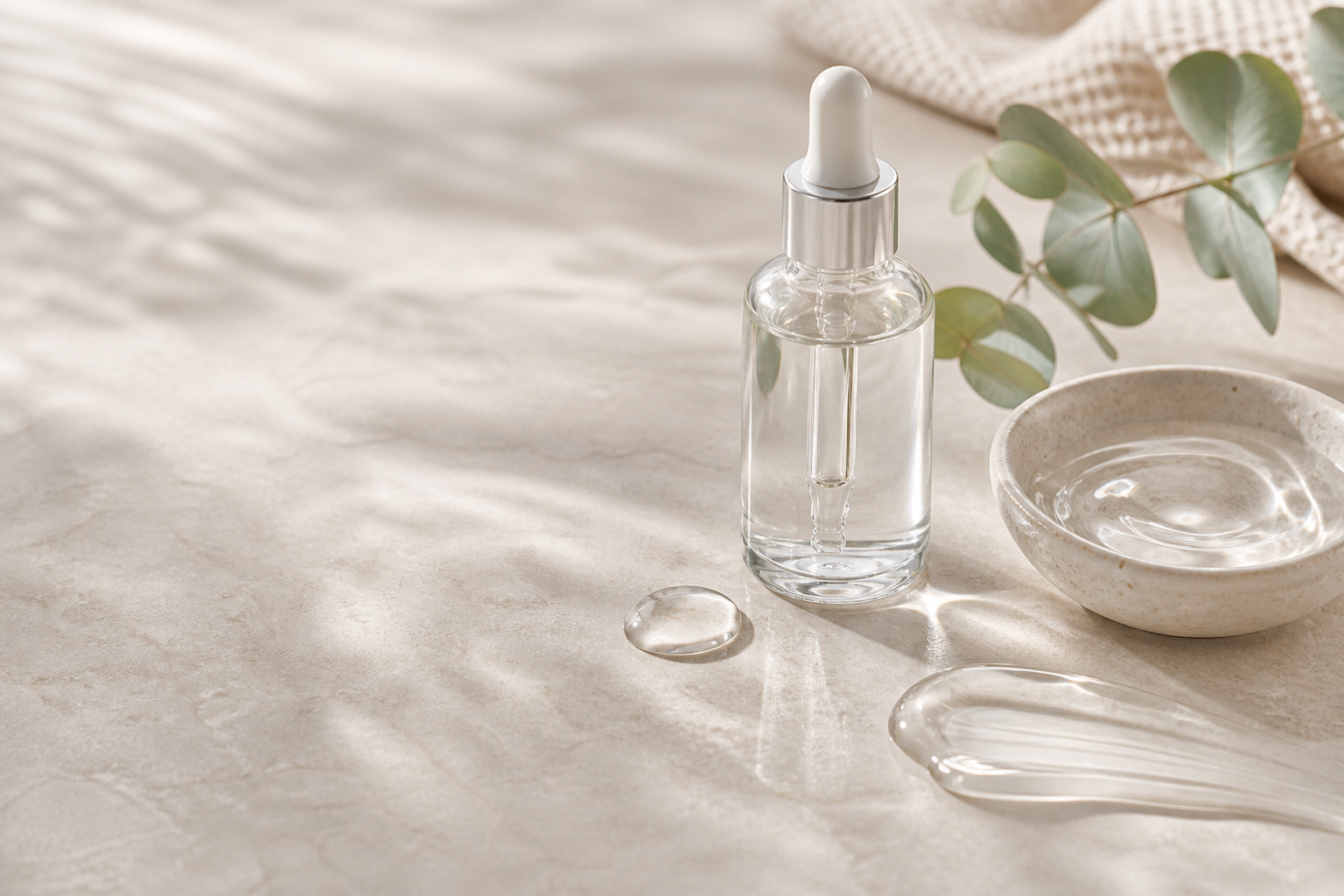
Key points
- Hyaluronic acid is a cosmetic moisture-binding ingredient used to support hydration.
- It can help dry skin look and feel more moisturised, plumper, and smoother.
- Product formulation and molecular size matter; results are not identical across all products.
- A simple order is cleanse, hydrating step, cream, and sunscreen in the morning.
- If skin becomes irritated, uncomfortable, or unusually red, stop use and reassess.
What hyaluronic acid is
One important point is that not all hyaluronic-acid products are the same. Different molecular sizes and formulation choices can change how a product performs on the skin. In other words, the ingredient name alone does not tell you the whole story.
What it can and cannot do
When used in a cosmetic formula, hyaluronic acid can support a well-hydrated look and may make dry skin appear and feel improved. It can also help the skin surface look plumper and smoother, especially when the skin is feeling moisture-depleted.
That said, it is best to keep expectations realistic. Hyaluronic acid in skincare is not a filler, and it should not be presented as a medical treatment. It is a cosmetic ingredient, not a substitute for professional care or a solution that works the same way in every formula.
In practical terms, people often use it for a fresher-looking complexion and for the appearance of dryness-related fine lines. The key phrase here is “appearance”: the ingredient supports a cosmetic effect, not a medical one.
If you are comparing products, formulation matters. The exact form of hyaluronic acid, the rest of the formula, and how you use it in your routine can all influence the result.
How to use it in a simple routine
A straightforward routine is usually enough. A practical order is:
1. Cleanse the skin. 2. Apply the hydrating step. 3. Follow with cream or moisturiser. 4. In the morning, finish with sunscreen.
Hyaluronic acid is often used after cleansing and before cream. If the skin is slightly damp, that can fit well with a hydration-focused routine. The main idea is to seal in moisture with the next step rather than leaving the skin with just a watery layer on top.
If your skin is dry or easily overwhelmed, keep things simple. A short routine is often easier to maintain and easier to evaluate. Start gradually so you can see how your skin responds.
For more on how product categories fit into a broader routine, see KLAPP Skincare Categories.
Questions readers often ask
What does hyaluronic acid do in skincare?
It is a moisture-binding cosmetic ingredient used to support hydration. It can help the skin look more moisturised, plumper, and smoother, particularly when dryness is part of the concern.
Is hyaluronic acid the same in every product?
No. Formulation and molecular size matter, so two products with the same ingredient name can feel and perform differently.
Where does hyaluronic acid fit in a routine?
Usually after cleansing and before cream or moisturiser. In the daytime, sunscreen is typically the last step.
What should I not expect from it?
Do not expect it to act like a filler or a medical treatment. It is a cosmetic ingredient that supports the look and feel of hydrated skin.
What if my skin feels irritated?
If skin becomes uncomfortable, red, or reactive, stop use and reassess the routine.
Public references
- Benefits of topical hyaluronic acid for skin quality and signs of skin aging — Dermatologic Therapy / PubMed
- Hyaluronic Acid in Topical Applications: The Various Forms and Biological Effects of a Hero Molecule in the Cosmetics Industry — Biomolecules / PubMed
- Cosmetics legislation: guidelines and claims — European Commission
Explore KLAPP Finland
Explore Healthy & Elegant’s KLAPP Finland overview for professional skincare context and a calm next step.
Explore KLAPP Finland