
Carbohydrate Table Checklist: How to Read GI Entries Carefully
This editorial example shows how to read source-reported carbohydrate and glycaemic-index entries without inventing missing values. It is for readers who want a repeatable checklist that keeps the exact food name, preparation wording, and reported number attached to each table entry.
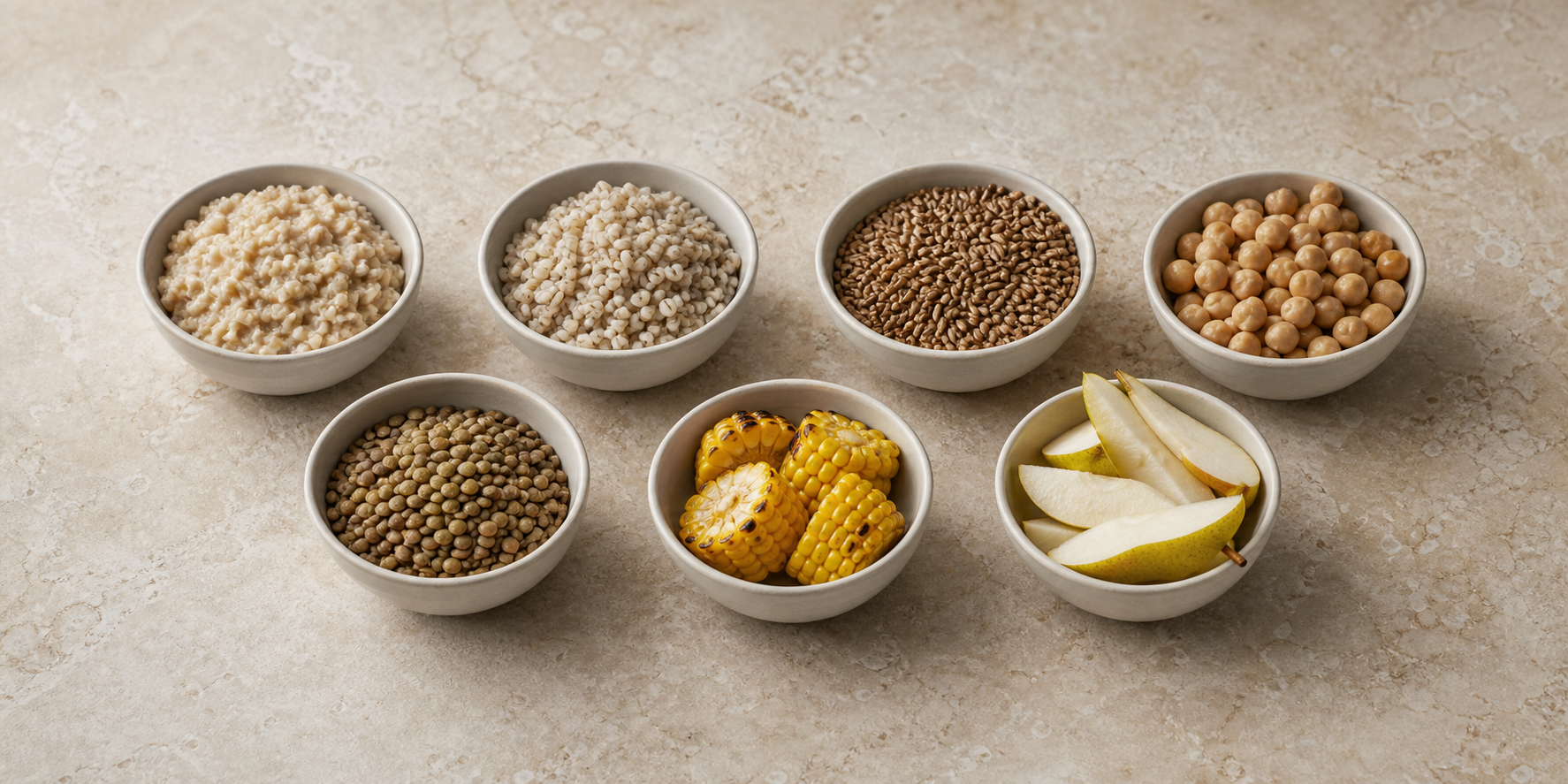
Key points
- Keep the full source entry attached to the GI value, including the exact food name.
- Preserve preparation wording such as boiled or grilled when it appears in the label.
- Compare only the entries actually listed in the source table.
- Leave missing values unreported rather than guessing or borrowing from another source.
- Treat the table as general education, not as a prediction of an individual response.
This editorial example is a practical carbohydrate table checklist for reading source-reported glycaemic-index entries carefully. It is for adults who want to keep a food name, any preparation wording, and the reported number together instead of turning a table into a personal diet rule. The key point is simple: the approved sources present GI-style entries as specific food items with reported numbers, and a table entry does not predict an individual response.
Use the checklist below when you want to read the source text faithfully, compare only what is actually listed, and leave any absent value unreported.
Direct answer: keep the complete entry attached to the number
Read each source row as one complete unit: the food name, any extra wording in the label, and the reported GI value. The approved sources show item-level entries rather than one universal value for every version of a food. That means the safest reading habit is to keep the full entry together and avoid separating the number from the exact wording that appears with it.
This is general education, not personal assessment. A table can help you read source data accurately, but it does not tell you how any one person will respond.
Check 1: preserve the exact food name
The first step is to keep the food name exactly as written in the source. The approved tables present entries as specific items paired with numbers, so the name matters as much as the value.
If you are taking notes, repeat the full entry before you think about comparisons. For example, if the source says a food is listed as a named entry with a GI value, do not shorten the label in a way that removes part of what the source recorded.
When a source entry is written in a particular form, treat that form as part of the entry itself.
A useful note-taking rule
Write the full source wording first, then the number second. That keeps the item and the metric attached to each other and reduces the chance of mixing entries together later.
Check 2: keep preparation wording visible
Some source entries include preparation wording or parenthetical wording in the food label. In the approved sources, examples include entries such as Chickpeas (Boiled), Lentils (Boiled), and Corn (Grilled). That wording is part of the reported entry and should stay visible when you quote or summarize it.
This matters because the same or similar food can appear in different forms across the sources. The sources show that one version may be named differently from another, so the exact wording should not be collapsed into a generic label.
Practical check
Before you compare two entries, ask:
- Does the label include a cooking method?
- Does it include a parenthetical qualifier?
- Does the source use a slightly different name for a similar food?
If the answer is yes, keep that wording attached to the entry.
Check 3: identify the reported metric
The approved sources pair food entries with GI values. Before comparing anything, confirm which metric the table actually reports. Do not substitute another measure, and do not assume a missing metric from memory.
This is especially important because the sources are entry-specific. A food name plus GI value should be read as one reported pairing, not as a free-floating number.
A helpful way to stay accurate is to label the metric in your notes before you interpret anything. That keeps you from mixing the reported number with serving size, carbohydrate amount, or a broader judgment that the source does not make.
Check 4: compare only the entries actually listed
Comparisons should stay inside the entries that are actually shown in the source table you are reading. The approved sources include different GI numbers for different foods, which means comparisons are limited to the listed rows and not to an invented full ranking.
For example, the sources show varied entries such as Broccoli GI 10, Pear GI 30, and Glucose GI 100. The point of those entries is not to turn one table into a universal ranking of all foods. The point is to compare the rows that are present, in the exact format they are presented.
If you are reading two tables, do not merge them unless you are certain the labels are identical and the source wording is being preserved exactly.
Check 5: leave absent values unreported
If a value is not shown, leave it unreported. Do not fill the gap from memory, from another table, or from a guess based on a similar food.
This rule matters because the approved sources are selected entries, not a complete table for every food and preparation. When the source does not provide a value, the most accurate choice is to leave that field blank in your notes.
Simple workflow for missing data
- Copy the full source label.
- Check whether a GI value is actually shown.
- If it is not shown, leave the value blank.
- Do not interpolate or borrow a number from a different entry.
That keeps your notes faithful to the source and avoids inventing detail.
Check 6: keep one metric separate from a complete food ranking
A single reported GI value is not a full judgment about the food, and it is not a universal ranking. The approved sources show repeated GI numbers across different foods, which is one reason not to treat the table as a complete ranking system.
A useful way to stay grounded is to ask: “What does this entry actually say?” rather than “What does this food mean overall?” The first question stays within the source. The second can drift into interpretation that the table itself does not support.
If you want to compare foods, compare the exact listed entries. If you want to understand a broader pattern, you need a broader, source-supported framework than one table row.
Table-reading reminder
One metric can inform a note. It cannot, by itself, settle a whole category judgment.
Check 7: separate source data from an individual response
The final check is the most important boundary: separate table data from personal response. The approved sources do not predict an individual’s response, and this article is written for general education only.
That means the correct conclusion is not “this table tells me what will happen to me.” The correct conclusion is “this table shows how a source recorded a specific food entry and its reported number.”
If you are using GI-style tables for general learning or for organized note-taking, keep your language neutral. Avoid turning the table into a personal prescription or a medical conclusion.
Editorial example: the complete seven-check sequence
Here is the full workflow in one compact sequence.
- Keep the complete entry attached to the number.
- Preserve the exact food name.
- Keep preparation wording visible.
- Identify the reported metric.
- Compare only the entries actually listed.
- Leave absent values unreported.
- Separate source data from an individual response.
Example of careful source reading
If a source entry is written as a complete food label plus GI value, read it as one unit. If the label includes wording such as a preparation method or qualifier, keep that wording. If the value is not shown, do not invent it. If another source uses a slightly different label, do not collapse the two labels into one unless the source wording truly matches.
That sequence is the safest way to read a carbohydrate table without overreading it.
Quick summary
The best way to read GI-style tables is to keep the full source entry intact: exact food name, exact wording, and exact reported number. Compare only what is listed, leave missing values blank, and keep source data separate from personal interpretation.
Final checklist before recording a comparison
Pause before saving a comparison and read the complete labels once more. Confirm that every number remains attached to its exact food name, preparation wording, and reported metric. If an entry is absent, mark it not reported instead of filling the gap from another source.
Then separate the source note from personal interpretation. A source-reported table describes its listed entries; it does not predict an individual's response or establish a complete judgment about a food. This final check keeps the record faithful to the approved sources while leaving unanswered questions explicitly unresolved.
Frequently asked questions
What should I attach to a source-reported GI value?
Attach the full food entry to the number: the exact food name and any preparation or qualifier wording that appears in the source.
Why does the exact wording matter?
The approved sources show that similar foods can appear with different naming conventions or added wording. Preserving the wording reduces the risk of merging distinct entries.
What if a value is missing?
Leave it unreported. Do not fill in a number from memory, from a similar food, or from another table.
Can I use one table entry to rank the whole food?
No. The approved sources show specific reported entries, not a universal ranking. Keep comparisons limited to the entries actually listed.
Does a table value predict my personal response?
No. The sources do not predict an individual response, so the table should be read as general education rather than personal assessment.
Questions readers often ask
What should I attach to a source-reported GI value?
Attach the full food entry to the number: the exact food name and any preparation or qualifier wording that appears in the source.
Why does the exact wording matter?
The approved sources show that similar foods can appear with different naming conventions or added wording. Preserving the wording reduces the risk of merging distinct entries.
What if a value is missing?
Leave it unreported. Do not fill in a number from memory, from a similar food, or from another table.
Can I use one table entry to rank the whole food?
No. The approved sources show specific reported entries, not a universal ranking. Keep comparisons limited to the entries actually listed.
Does a table value predict my personal response?
No. The sources do not predict an individual response, so the table should be read as general education rather than personal assessment.
Continue with Health360
Visit the Health360 overview.
Visit the Health360 overview.