
Body Lotion or Body Cream Choosing by Texture: A Catalogue-Verified Guide
A calm, catalogue-based guide to reading KLAPP Cell Pro Body lotion- and cream-labelled formats by exact wording, routine context, and consumer-versus-professional status.
Key points
- The verified Finland snapshot contains eight Cell Pro Body records: five consumer/at-home-care and three professional-only.
- The catalogue supports exact wording such as 'light formulation' for one lotion-labelled consumer record, but not a universal lotion-versus-cream hierarchy.
- Professional-only Cell Pro Body records are identified separately from consumer/at-home-care items.
- RoutineStep and recommendation tags can describe catalogue context, but they do not create a fixed usage protocol.
- The source set does not support medical, anti-ageing-treatment, cellulite-treatment, or promised-outcome claims.
What lotion or cream means in this catalogue guide
If you are trying to understand body lotion or body cream choosing by texture, the safest place to start is the catalogue wording itself. In the verified Cell Pro Body snapshot, the format name is only part of the picture. What matters most is the exact description attached to each record, plus whether the item is listed for consumer/home use or marked as professional-only.
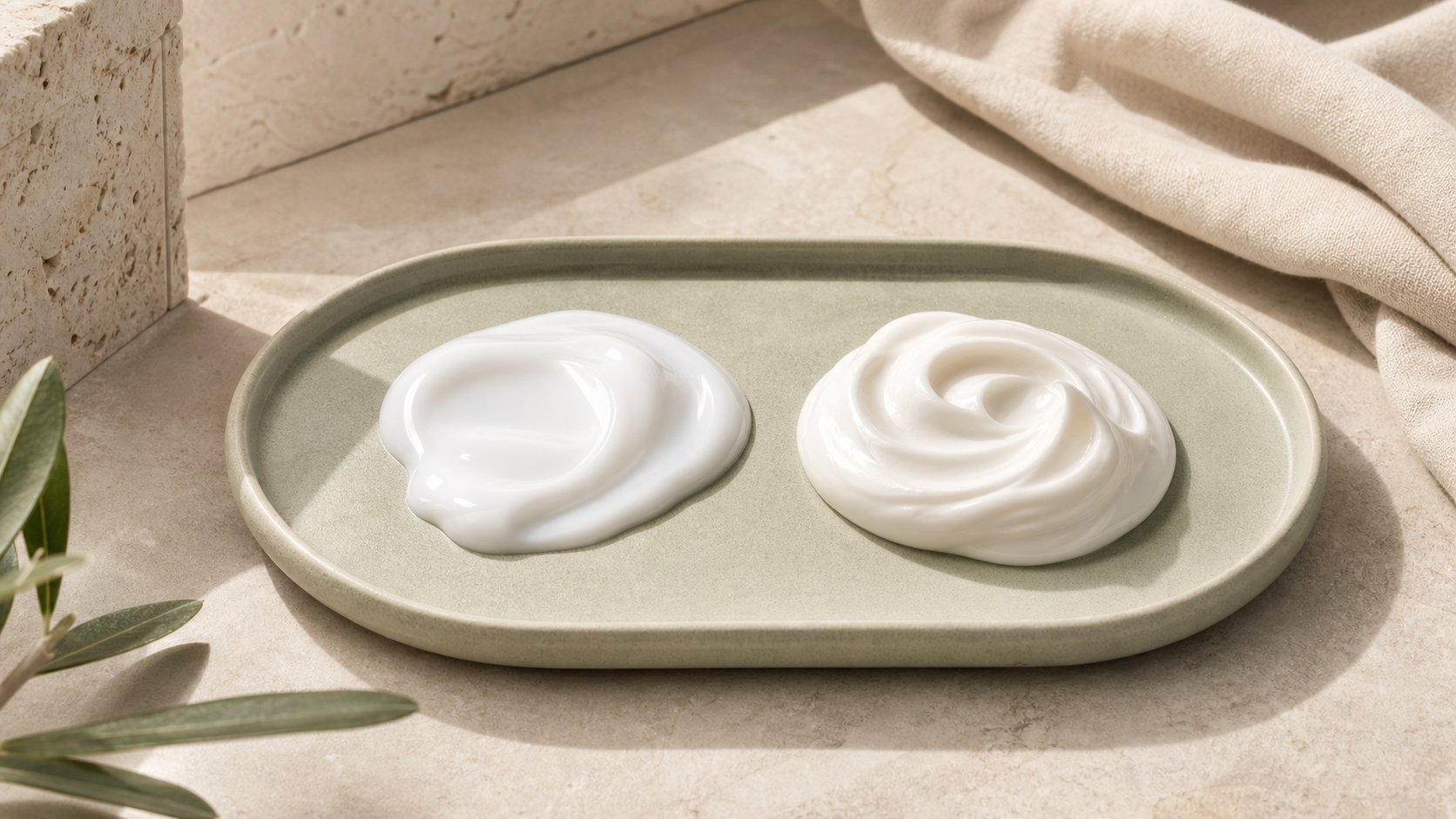
That distinction matters because the sources do not support a universal rule such as “lotions are always lighter” or “creams are always richer.” Instead, the catalogue shows record-specific wording. One lotion-labelled consumer item is described as a light formulation, while cream-labelled items use other descriptors. In other words, the catalogue is telling you to read carefully rather than to assume that the format name alone defines the feel or use case.
What the verified Finnish catalogue confirms
The verified Finland snapshot contains exactly eight Cell Pro Body records in this source set: five consumer/at-home-care records and three professional-only records. All are currently marked available in Finland in the verified catalogue data. The structured records are what control identity, availability, and whether an item belongs in consumer at-home care or in a professional setting.
For a reader or skincare professional, that means the first question is not “lotion or cream?” in isolation. The first question is: what does the catalogue actually say about this record, and who is it for?
The consumer/at-home-care side of the snapshot includes one lotion-labelled format and two cream-labelled formats. The professional-only side remains separate and should not be folded into consumer advice.
The exact five-to-three consumer and professional boundary
A catalogue-verified guide should keep the two groups distinct:
- Consumer/home-use records: the items intended for home care in this snapshot.
- Professional-only records: the items marked separately as professional-only.
That separation is not just editorial; it is part of the source structure. The professional-only Cell Pro Body records are identified separately in the catalogue and, according to the approved brand material, the line is available exclusively through professional channels such as beauticians, wellness oases and hotel spas.
This is why a general consumer article should avoid treating professional-only entries as if they were part of the normal at-home assortment. The source set supports availability and status distinctions, but not a blended consumer recommendation list.
Read exact texture wording instead of assuming from the format name
The strongest practical lesson from the catalogue is simple: read the exact wording.
The verified records use specific descriptors rather than one uniform texture hierarchy. One lotion-labelled consumer product is described as a light formulation. Another record in the set uses rich in its copy, which shows that the catalogue relies on product-level language, not a single rule that applies to every lotion or cream entry.
That means a careful reader should avoid these assumptions:
- that every lotion is lighter than every cream;
- that every cream is richer than every lotion;
- that the format name alone tells you enough about texture or experience.
Instead, look for the exact descriptor in the record. If the catalogue says light formulation, read it as that. If it says rich, read it as that. Do not upgrade either label into a broader claim about all body care.
Use routine context without prescribing a routine
The structured catalogue includes fields such as routineStep and recommendation tags like daily, moisturize, tone, body care and morning. That makes it possible to describe the range at a category level and understand how the catalogue organizes products within a routine.
But those fields do not create a universal use schedule. The source set does not tell you to apply a product at a certain frequency, in a fixed amount, or in a prescribed order for every situation. So the right approach is descriptive, not instructional: routine context can help you interpret the catalogue, but it should not be turned into a personal usage protocol.
For Finnish readers, this is a useful distinction. A catalogue can tell you how a product is framed inside an ihonhoito routine, while still stopping short of telling you exactly what to do at home.
Why this is not a skin-condition treatment guide
The source set is a catalogue and brand-material snapshot, not clinical evidence. Because of that, it does not justify medical, anti-ageing-treatment, cellulite-treatment, barrier-treatment, hydration-treatment, or promised-outcome claims in a consumer guide.
That boundary matters even when product copy uses cosmetic language about appearance. Catalogue wording can describe how a product is positioned, but it is not the same as proving a skin outcome. For that reason, this article stays at the level of catalogued wording, category structure, and routine context.
So if you are reading the range for education or assortment review, keep the framing cosmetic and descriptive:
- what the record is called;
- whether it is consumer/at-home-care or professional-only;
- what exact wording the catalogue uses;
- how the record sits in routine context.
Keep professional formats outside consumer at-home care
The professional-only Cell Pro Body entries are not consumer at-home care items, and they should not be presented that way. The catalogue marks them separately, and the approved brand material says the line is available through professional channels.
That separation is important for both consumers and cosmetologists. A consumer browsing body care should not infer that every Cell Pro Body record belongs in a home shelf. A professional, on the other hand, should still verify the exact catalogue status before treating an item as part of a service menu or retail assortment.
In short: availability status comes first, format name second, and any texture interpretation third.
A catalogue-led lotion-or-cream checklist
If you want a practical way to read the range, use this checklist:
1. Check the exact product wording
Do not start with assumptions about lotion or cream. Start with the record text and note whether the catalogue uses wording such as light formulation or rich.
2. Check whether the item is consumer or professional-only
Treat the two groups separately. Professional-only items remain professional-only, even if they sit in the same broader Cell Pro Body family.
3. Read routine tags as context, not instructions
RoutineStep and recommendation tags can help you understand how the catalogue organizes the product, but they do not replace a personal assessment or a professional consultation.
4. Avoid universal texture rules
Do not assume that every lotion is lighter than every cream, or that every cream is richer than every lotion. The snapshot does not support that kind of rule.
5. Keep cosmetic language non-medical
A body care label can describe appearance or category position without becoming a treatment promise. Stay with the exact wording the catalogue provides.
A simple way to think about the range
For this verified Finland snapshot, the most accurate summary is not “lotion versus cream” as a universal hierarchy. It is this:
- the catalogue contains a small, bounded Cell Pro Body record set;
- the consumer/at-home-care items and professional-only items are separated;
- one lotion-labelled consumer record is described as a light formulation;
- the cream-labelled consumer records use their own exact wording;
- the source set does not support broad texture or outcome rules.
That makes the guide useful for assortment reading, category review, and professional communication — without overclaiming what the products do. The wording remains category-level and does not identify or recommend an individual catalogue product.
FAQ
Is every body lotion lighter than every body cream?
No. The source set does not support a universal rule like that. It supports one lotion-labelled consumer record described as a light formulation, but it does not justify generalizing that wording to all lotions or all creams.
Can I treat professional-only Cell Pro Body items as at-home products?
No. The catalogue identifies professional-only records separately, and the approved brand material places the line in professional channels rather than consumer at-home care.
Can I use the routine tags as a fixed usage plan?
No. The structured records include routineStep and recommendation tags, but the sources do not provide a universal frequency or amount for the whole category.
Does the catalogue support anti-ageing or cellulite-treatment claims?
No. The source set is not medical evidence, and it does not justify treatment or promised-outcome claims in a consumer guide.
What should I verify first when reading the range?
First verify the exact wording in the record, then check whether the item is consumer/at-home-care or professional-only, and only after that consider any texture-related context.
Further reading
If you want a broader view of the brand context, start with the KLAPP Finland knowledge base on the Cell Pro range and then return to the catalogue wording when comparing formats.
Questions readers often ask
Is every body lotion lighter than every body cream?
No. The source set does not support a universal rule like that. It supports one lotion-labelled consumer record described as a light formulation, but it does not justify generalizing that wording to all lotions or all creams.
Can I treat professional-only Cell Pro Body items as at-home products?
No. The catalogue identifies professional-only records separately, and the approved brand material places the line in professional channels rather than consumer at-home care.
Can I use the routine tags as a fixed usage plan?
No. The structured records include routineStep and recommendation tags, but the sources do not provide a universal frequency or amount for the whole category.
Does the catalogue support anti-ageing or cellulite-treatment claims?
No. The source set is not medical evidence, and it does not justify treatment or promised-outcome claims in a consumer guide.
What should I verify first when reading the range?
First verify the exact wording in the record, then check whether the item is consumer/at-home-care or professional-only, and only after that consider any texture-related context.
Explore the KLAPP Cell Pro range with verified context
If you want to continue from category reading to a broader brand overview, use the verified KLAPP Finland knowledge base and the Cell Pro range summary as your next step.
Learn more about the KLAPP Cell Pro range