
Afternoon Hunger: Practical Meal Ideas and When to Get Advice
Afternoon hunger can vary from person to person. Here’s a general, non-diagnostic way to think about meal structure, lower-GI food choices, and when to seek qualified advice if hunger feels persistent or concerning.
Key points
- Afternoon hunger varies, and hunger alone does not identify a medical cause.
- Looking at meal timing and structure can help you notice patterns without over-interpreting them.
- A practical meal can combine vegetables, a clear protein portion and a suitable lower-GI option.
Why afternoon hunger can feel stronger
Afternoon hunger can vary for many non-diagnostic reasons. Based on the approved sources, it is reasonable to think about meal timing and meal structure, but not to assume a medical cause from hunger alone. The source guidance also includes specific timing suggestions, such as not eating too close to sleep and leaving a long break between dinner and breakfast, but those are presented as instructions rather than as proven explanations for afternoon hunger.
For that reason, a helpful approach is to notice patterns without over-interpreting them. If hunger tends to show up in the afternoon, it may be worth looking at what lunch looked like, how long it has been since the last meal, and whether the overall eating pattern feels consistent from day to day.
How meal composition may support satisfaction
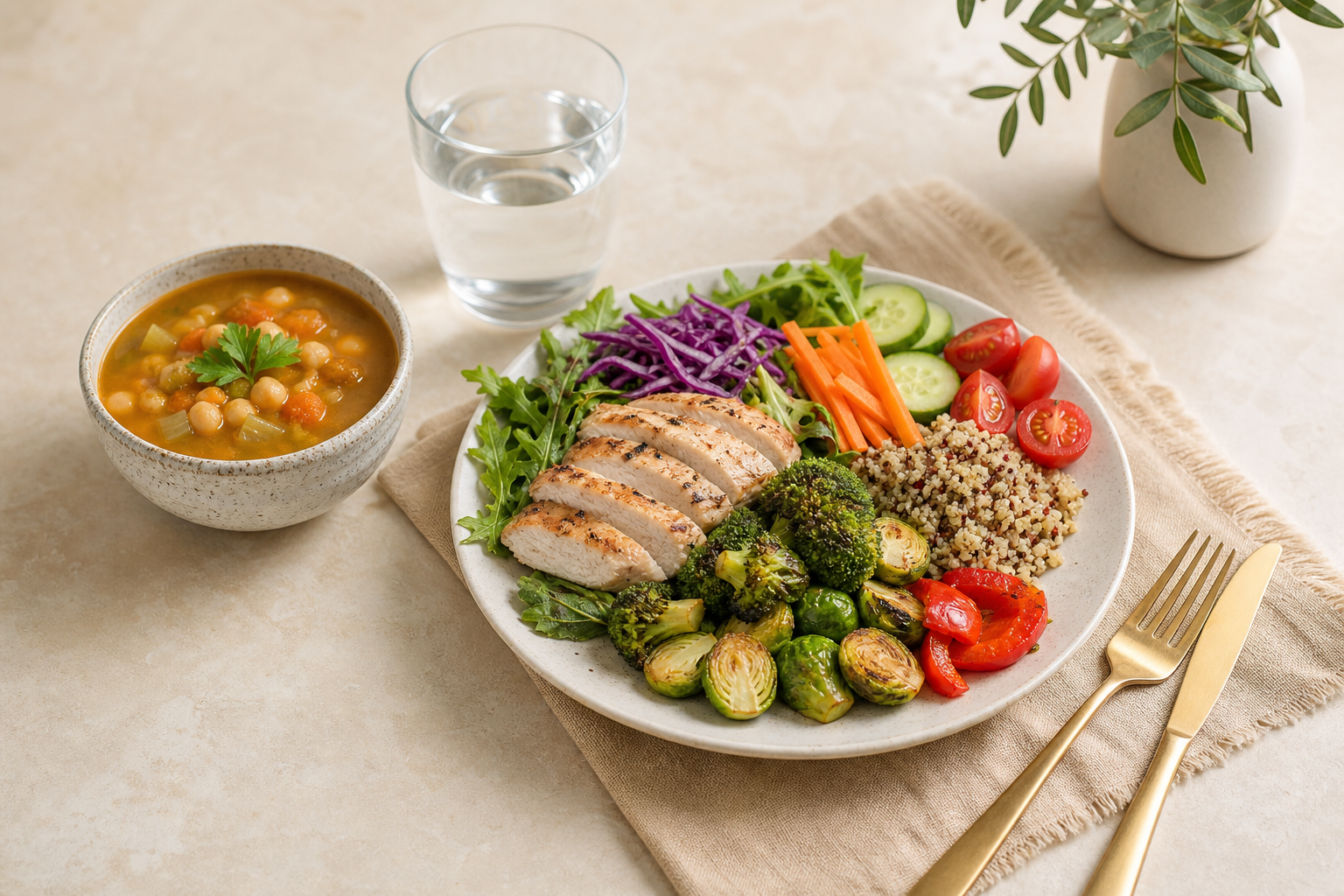
One of the approved sources recommends a simple plate structure: start with fresh vegetables, aim for about half the plate as fresh vegetables, then include one quarter protein and one quarter cooked non-starchy vegetables. That is a practical, source-based way to build a meal with more structure.
Another approved source lists several lower-GI carbohydrate foods that can be used as examples within meals. These include lentil soup, chickpea soup, black bean soup, mixed bean soup, hummus without oil, and several bean or pea stews. The same source also includes some fruits such as grapefruit, lemon, lime, and pear among the listed lower-GI options.
Taken together, these sources support a general pattern: build meals from vegetables, include a clear protein portion, and choose carbohydrate foods from the approved lower-GI examples when they fit the meal.
Simple meal-building ideas
If afternoons often feel hungry, a simple starting point is to make lunch more structured rather than more restrictive. For example:
Build the next meal step by step
- Fill about half the plate with fresh vegetables.
- Add a clear protein portion.
- Include cooked non-starchy vegetables.
- Choose a listed lower-GI food, such as lentil or chickpea soup, when it fits the meal.
A meal like salad or cooked vegetables with protein and a legume-based soup fits the source guidance without requiring complicated rules. A similar approach could also use bean or pea stews, if those are foods you already enjoy and tolerate well.
The approved sources also include hydration guidance: drink water throughout the day and drink water before a meal. These are source recommendations, but they are not presented as proven explanations for hunger, so they are best treated as general guidance rather than a certainty.
What about snacking?
One approved source advises avoiding frequent snacking and presents that as part of its overall eating pattern. Because the source is unusually strong on this point and the broader evidence set does not corroborate it, it is best to treat this as source-specific guidance rather than universal nutrition science.
In practice, that means the point can be mentioned carefully, but it should not be turned into a rule for everyone. Some people may prefer structured meals; others may need a different rhythm. The approved evidence does not support one universal approach for every person.
Questions readers often ask
Does afternoon hunger mean something is medically wrong?
Not necessarily. The approved sources do not support a medical explanation from hunger alone. Afternoon hunger can vary for many non-diagnostic reasons.
What is a simple way to build a more satisfying lunch?
Use the source-based plate pattern: about half fresh vegetables, one quarter protein, and one quarter cooked non-starchy vegetables. You can also choose approved lower-GI foods such as lentil soup, chickpea soup, black bean soup, mixed bean soup, or hummus without oil.
Should everyone avoid snacking?
The approved source includes a strong anti-snacking recommendation, but the evidence set here does not validate it as a universal rule. It is better to treat it as source-specific guidance rather than settled nutrition science.
When should I talk to a healthcare professional?
If hunger feels persistent, unusually disruptive, or concerning, it is reasonable to discuss it with a qualified healthcare professional, especially if it comes with other symptoms.
Explore Health360
Health360 can help you notice meal and routine patterns and build practical daily habits. It does not diagnose conditions or replace qualified healthcare advice.
Explore Health360