 By
·
11 minute read
By
·
11 minute read
Age-related weight gain often shows up quietly: a tighter waistband, slower recovery, and a body that reacts differently to the same food and workouts. Here is the core truth: after 40, your body responds best to structure, not restriction.
If you have been wondering why weight gain happens with age, how age and metabolism slowdown actually works, and how to prevent weight gain after 40 without living in calorie math, you are in the right place.
Published:
Table of Contents
- Why weight gain happens with age
- Age and metabolism slowdown
- Hormonal shifts after 40
- Muscle loss and body composition
- Prevent weight gain after 40: the 4-part plan
- Nutrition strategy that feels normal
- Movement strategy: minimum effective dose
- Sleep and stress: the hidden switches
- Comparison table: what to do first
- How Health360 supports midlife weight control
- FAQ
Why weight gain happens with age
Answer first: your daily energy burn usually drops
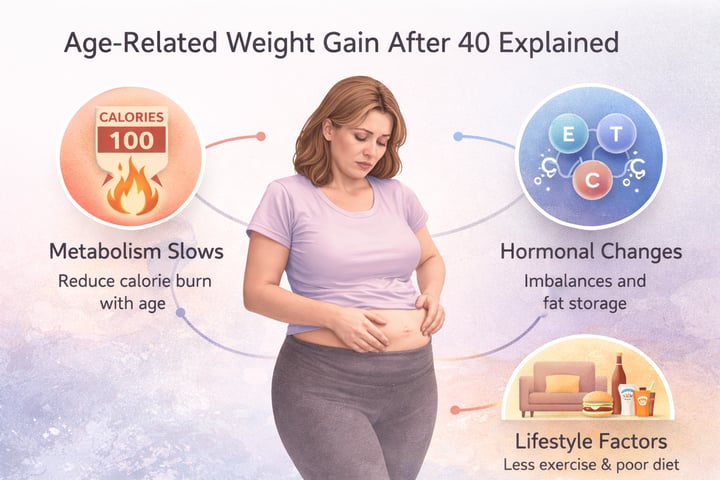
Weight gain happens with age because total daily energy expenditure tends to decrease. That decrease comes from a mix of subtle muscle loss, reduced spontaneous movement, and metabolic shifts that make energy regulation less forgiving. It is often not dramatic week to week, but it adds up across months and years.
A simple example: if your daily burn drops by 150 calories because you sit more and have slightly less muscle, that is not obvious day to day. But over time it becomes visible in how your clothes fit. The body does not need a huge surplus to change shape slowly. This is also why women feel confused: they think nothing has changed, but the baseline has shifted quietly.
Another subtle factor is decision fatigue. When life is busy, meals become more random and convenience-driven. You may still eat "healthy," but portions creep up, snacks become frequent, and late meals happen more often. Combine that with lower energy expenditure and the scale has a reason to move even without obvious overeating.
Less movement is the most underestimated factor
Most women do not suddenly become lazy. Life becomes more scheduled: work, family, stress, screen time, commuting, responsibilities. Even if you still train once or twice a week, your in-between movement often drops. These small losses matter because daily movement can represent a large share of your total calorie burn.
If you want one habit that is nearly always helpful, increase gentle movement. Add walking calls, take stairs, park farther away, do a short walk after meals. Midlife weight management is rarely solved by a harder workout. It is more often solved by a more consistent baseline.
Insulin sensitivity shifts make the same meals behave differently
As you age, blood sugar regulation can become less efficient. This does not mean you are broken. It means the same breakfast that felt fine at 28 may cause a bigger glucose spike at 44. When spikes increase, cravings often increase too, and the body can store more energy as fat, particularly around the abdomen.
This is why many women describe sudden afternoon hunger, brain fog, and the feeling of needing sugar to function. The fix is not a stricter diet. The fix is smarter meal structure: protein, fiber, and lower-glycemic carbs more often. You are not "failing." Your physiology is asking for a different strategy.
General public guidance on healthy weight is available via CDC Healthy Weight.
Age and metabolism slowdown
Answer first: most slowdown comes from body composition, not age alone
Age and metabolism slowdown is real, but the biggest driver is often loss of lean mass. Metabolism is not just one number. It includes resting energy burn, digestion-related burn, and movement-related burn. When muscle decreases and movement becomes less frequent, the total drops.
This matters because the solution becomes clear: do not chase tiny calorie targets. Preserve muscle and build a lifestyle that keeps you moving. That is how you keep your metabolism functional without obsessing.
Basal metabolic rate is tied to lean tissue
Resting metabolic rate is influenced strongly by lean body mass. Muscle is metabolically active and contributes to energy use even at rest. If you lose muscle slowly over a decade, your baseline needs can shrink without you noticing. That is why midlife weight management is not about eating less forever. It is about preserving the tissue that keeps your baseline higher.
Another benefit: more muscle improves glucose disposal. That means better blood sugar control and fewer cravings. So strength training helps in two ways at once: energy burn and metabolic stability. If you want weight control that feels calm, muscle is your best ally.
Thermogenesis and recovery can shift too
Some women notice a lower thermogenic response to food and a slower recovery from high-volume training. This does not mean you need extreme workouts. It means you should choose training that builds strength and muscle efficiently, and pair it with recovery basics: sleep, protein, hydration, and stress control.
If high-intensity workouts leave you inflamed, exhausted, and craving sugar, that is a sign the dose is wrong for your current physiology. Midlife progress often improves when training becomes more consistent and less punishing. Think "enough to adapt" rather than "enough to suffer."
A useful science overview is available via the National Library of Medicine: NIH metabolic changes with age.
Hormonal shifts after 40
Answer first: hormone changes can change where fat is stored
Hormonal shifts after 40 can increase abdominal fat storage and change appetite and sleep. Many women notice that their body shape changes, even if the scale does not change much at first. The waist becomes softer, the abdomen stores more easily, and hunger patterns become less predictable.
Estrogen fluctuations can affect fat distribution
During perimenopause and menopause, estrogen patterns change. This can influence how the body stores fat and how sensitive the body is to insulin. It is one reason belly fat becomes a common complaint during this stage.
The goal is not to fight your body. The goal is to work with your physiology: preserve muscle, stabilize blood sugar, reduce chronic stress, and keep your routine predictable enough for your hormones to calm down. Many women see a big difference simply by improving sleep, eating more structured meals, and lifting weights consistently.
Stress and cortisol can amplify the effect
Stress is not just emotional. Chronic stress changes physiology. Higher cortisol can increase cravings, reduce sleep quality, and nudge fat storage toward the abdomen. When stress is high, strict diets often backfire because they increase the stress load further.
A good rule: if your plan makes you feel anxious, it will not work long-term. Midlife fat loss responds better to calm consistency than to panic motivation. Choose habits that lower stress while still moving you forward.
Thyroid and basic labs are worth checking if symptoms appear
If weight changes are sudden or paired with fatigue, hair changes, low mood, or intolerance to cold, discuss thyroid markers and basic labs with a clinician. This article is not medical advice, but it is a reminder that you deserve data. Many women suffer for years assuming it is "just age."
If you have symptoms, track them for two weeks and bring the notes to your appointment. Data turns vague feelings into actionable next steps.
Muscle loss and body composition
Answer first: preserving muscle is the biggest lever for midlife weight control
Muscle preservation makes it harder to gain fat and easier to maintain energy. You can technically stay the same weight while losing muscle and gaining fat, which changes shape, strength, and how clothes fit. So the goal is not only scale weight. The goal is body composition and metabolic health.
Sarcopenia starts gradually, but the solution is simple
Age-related muscle loss (sarcopenia) begins gradually. The good news: muscle responds to training at any age. You do not need complicated programs. You need a consistent stimulus that tells your body: keep this tissue, we still use it. That is exactly what strength training does.
If you are new to strength work, start with two full-body sessions weekly. Build technique first, then build load. The plan that works is the plan you can repeat. Consistency creates confidence, and confidence creates progress.
Protein supports muscle, but timing matters
Many women under-eat protein at breakfast and lunch and then try to catch up at dinner. Midlife muscle responds better when protein is distributed across meals. You want a steady supply for repair and synthesis. This also improves satiety, which makes weight control feel less like a fight.
If you dislike counting, use a simple visual target: include a palm-sized protein portion at each meal. Over time, this becomes automatic and results become much more predictable.
Prevent weight gain after 40: the 4-part plan
Answer first: you need a repeatable system, not a perfect week
To prevent weight gain after 40, focus on four pillars: muscle preservation, blood sugar stability, daily movement, and stress-sleep regulation. If one pillar is missing, progress becomes harder. If you hit all four consistently, your body usually responds.
Here is the mindset shift: you are not trying to "win" a short diet. You are building a system that fits your physiology now. The best plan is stable on normal weeks and still workable on chaotic weeks.
Pillar 1: preserve muscle with strength training
Aim for 2 to 3 strength sessions per week. You do not need to train like an athlete. You need to challenge muscles enough to maintain and build them. Think full-body basics: squats or leg presses, hinges, pushes, pulls, carries, and core stability. Start where you are and progress slowly.
If you want a simple rule: when strength work is consistent, everything else becomes easier. Cravings drop, posture improves, energy rises, and you feel more "in control" of your body again.
Pillar 2: stabilize blood sugar with structured meals
Blood sugar stability is not about fear of carbs. It is about choosing carbs that work with your body and pairing them properly. Protein, fiber, and healthy fats slow digestion and reduce spikes. This typically reduces cravings and improves energy, which makes consistency easier.
A practical approach is to create a predictable breakfast and lunch and keep dinner flexible. When the first two meals are stable, the day usually goes better. You avoid the afternoon crash that pushes you into snacks and late-night cravings.
Pillar 3: daily movement baseline
Walking is underrated. It improves insulin sensitivity, helps stress, and burns energy without overwhelming recovery. If you feel stuck, build a baseline first. A consistent baseline beats occasional heroic workouts.
Try this for 14 days: a 10-minute walk after one meal each day, plus one longer walk on weekends. Many women notice better appetite control and better sleep within the first week.
Pillar 4: sleep and stress recovery
Sleep is not a luxury. Poor sleep increases hunger signals and reduces satiety. Chronic stress pushes cravings and can shift fat storage toward the abdomen. The goal is not a perfect life. The goal is fewer "red days" where your body is running on stress chemistry.
- Strength: 2 to 3 sessions per week
- Steps: choose a daily baseline and build gradually
- Meals: protein + fiber first, carbs last
- Recovery: protect sleep and reduce chronic stress
If you want a simple weekly template, start here:
- Two full-body strength sessions (for example Tuesday and Friday)
- One longer walk on the weekend (45 to 60 minutes)
- Daily walk after one meal (10 to 20 minutes)
- Protein-forward breakfast most days
- Consistent bedtime window at least 5 nights per week
Nutrition strategy that feels normal
Answer first: low-glycemic structure is easier than strict restriction
The most sustainable nutrition approach for midlife is blood sugar stability. That usually means lower-glycemic options, adequate protein, and meals that do not create a hunger rollercoaster. When blood sugar is stable, the day feels easier. When it is unstable, cravings feel loud and energy feels fragile.
A simple plate framework you can repeat
Start with protein, then vegetables, then healthy fats, then carbs based on needs. This is not rigid. It is a pattern. The pattern improves satiety and energy for most women, which supports long-term adherence. If you are very active, you can increase carbs. If you are more sedentary, you keep carbs present but strategic.
A practical way to make low-glycemic eating automatic is to create 3 to 5 repeatable meal templates. For example: a protein-forward breakfast (eggs with vegetables, Greek yogurt with berries and seeds, or a tofu scramble), a lunch built around a palm-sized protein plus a large salad or cooked vegetables, and a dinner that keeps carbs intentional and paired. The point is not perfection. The point is reducing decision fatigue.
When you stop improvising, you stop "accidentally" eating in ways that trigger cravings. This is one of the biggest reasons structured meal plans work so well for women over 40: they remove the daily negotiation with yourself.
Common hunger traps after 40
A classic pattern is light breakfast, light lunch, crash at 4 pm. That crash is not personality. It is physiology. If you feed your body too little early, your appetite will demand repayment later. A protein-forward breakfast often changes the entire day.
Also watch the hidden liquid calories and "healthy snacks" trap. Many women do fine at meals but unknowingly add extra energy through lattes, juices, smoothies, protein bars, and grazing. If you snack, make it structured: protein plus fiber, not just fruit alone. Think cottage cheese with berries, hummus with vegetables, or a small handful of nuts paired with a protein source.
Finally, remember that midlife nutrition is not only about fat loss. It is about maintaining muscle and protecting long-term health markers. That is why adequate protein and resistance training are a pair. If you do one without the other, results feel slower. If you combine them, body composition improves even if scale changes are gradual.
One realistic example day
If you want a simple example that stabilizes blood sugar for many women, try this style of day: protein-forward breakfast, balanced lunch, and a calmer dinner with intentional carbs. This is not a rule. It is a starting point.
- Breakfast: Greek yogurt or eggs + berries or vegetables + seeds
- Lunch: Chicken, fish, tofu, or legumes + large salad or cooked vegetables + olive oil
- Dinner: Protein + vegetables + a moderate portion of lower-glycemic carbs if you need them
- Optional snack: Protein + fiber (not just fruit alone)
Internal links for HubSpot content clusters: Low glycemic meals, Protein for women 30+, Strength training basics, Sleep and weight, Stress and cortisol.
Movement strategy: minimum effective dose
Answer first: strength plus walking beats random cardio for most women
The best movement plan for midlife weight control is simple: strength training to preserve muscle and walking to improve insulin sensitivity and stress resilience. This combination is sustainable, effective, and easier to recover from than daily high-intensity workouts.
Strength training without overwhelm
You do not need to do everything. Pick a consistent plan, repeat it, and progress slowly. Progression can mean slightly heavier weights, slightly more reps, or better technique. If you go from zero to extreme, recovery suffers and the plan dies.
If you are worried about injury, start with machines, bands, and bodyweight patterns. The goal is confidence and repetition. When technique feels safe, strength work becomes enjoyable, not scary.
Walking and movement snacks
If you sit most of the day, movement snacks help. Stand up, stretch, walk for 3 minutes. Do a 10-minute walk after meals. This improves blood sugar response and reduces stiffness. It is also mentally calming, which indirectly supports fat loss.
- Choose two fixed strength days per week
- Add a third strength day when your routine stabilizes
- Walk daily, even if it is split into short blocks
Sleep and stress: the hidden switches
Answer first: sleep directly affects hunger and cravings
Poor sleep increases hunger signals and reduces satiety. When sleep is short, cravings often rise, mood worsens, and the body seeks quick energy. That is why "discipline" feels harder after a bad night. Fixing sleep can feel like fat loss without dieting.
Simple sleep upgrades that work
Start with basics: consistent bedtime, morning light, and a calmer evening. If you are sensitive to caffeine, stop it earlier. Keep your last meal comfortably timed. You do not need perfect sleep. You need better sleep most nights.
If you wake up at night, do not panic. Make your bedroom cooler, reduce late screens, and keep a consistent wake time. Most sleep issues improve with boring consistency.
Stress management that is actually doable
Stress reduction does not need a full lifestyle overhaul. Pick one daily calming action: a walk, breathing, a warm shower, journaling, or stretching. What matters is repetition. Stress is cumulative. The antidote should be consistent.
- Keep a consistent sleep window
- Get daylight early in the day
- Reduce late caffeine and late scrolling
- Choose one calming ritual daily
Comparison table: what to do first
Quick action matrix for midlife weight control
| Most common problem | Best first move | Why it works |
|---|---|---|
| Energy crashes and cravings | Protein-forward breakfast + walk after lunch | Stabilizes blood sugar and reduces afternoon hunger |
| Scale creeping up monthly | Two strength sessions weekly + consistent steps | Preserves lean mass and increases daily energy burn |
| Belly fat with high stress | Sleep window + calming routine + low-glycemic dinners | Improves hormonal balance and appetite control |
How Health360 supports midlife weight control
Health360: Weight & Anti-Age is designed for women who want a structured plan that matches midlife physiology. Instead of calorie counting, it supports low-glycemic meal planning, habit tracking (sleep, hydration, steps, stress), and consistent routines that improve metabolic stability.
If you are the type who loves clarity, you will like how Health360 turns the theory into daily actions. You see what matters today: meals, water, steps, sleep, and simple guidance that keeps your plan consistent. That consistency is what creates results in midlife.
- Structured low-glycemic meal planning
- Habit tracking for sleep, hydration, steps, and stress
- Guidance that prioritizes sustainable results over extremes
Download Health360: Weight & Anti-Age on Google Play
Tip: if you want the fastest "feels better" win, start by stabilizing breakfast and adding a daily walk. Then add strength sessions. Your body tends to respond better when the foundation is calm and repeatable.
FAQ
Why does weight gain happen with age?
Because muscle mass tends to decrease and hormones shift, which lowers daily energy burn and can increase fat storage efficiency. Reduced daily movement and higher stress also contribute by changing appetite and recovery.
Can I prevent weight gain after 40?
Yes. Strength training, stable meals, consistent movement, and sleep improvements reduce risk significantly. The key is consistency, not perfection. Build a weekly routine you can repeat.
Is age and metabolism slowdown real?
Yes, but it is usually modest. Loss of lean mass and less movement are often bigger factors than age alone. When you preserve muscle and keep a movement baseline, metabolism becomes far more stable.
Why does belly fat increase after 40?
Hormonal changes and stress can shift fat storage toward the abdomen, especially when insulin sensitivity decreases. The fix is not punishment. It is blood sugar stability, strength training, and better recovery.
How does Health360 help with age-related weight gain?
Health360: Weight & Anti-Age provides structure for low-glycemic meals and daily habits, supporting sustainable midlife weight control without calorie counting. It is built for real life: routines, tracking, and simple guidance that keeps you consistent.
About the author
Anna Stahl
Certified Anti-Age Nutritionist and creator of Health360: Weight & Anti-Age. I help women 30+ use structured nutrition and habit-based systems to manage weight and feel confident in their bodies again.