 By
·
10 minute read
By
·
10 minute read
10,000 Steps a Day: Exploring the Real Benefits and Myths
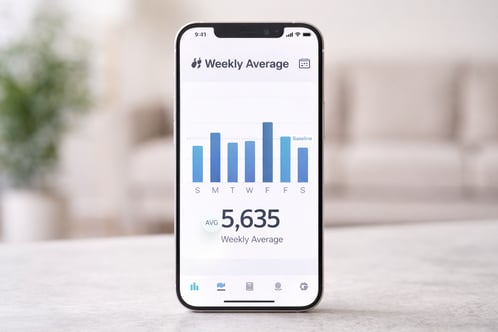
The 10 000 steps a day goal sounds like a magic rule. It is not. It is a simple, memorable target that helped millions of people move more. And that matters because modern life quietly pushes us into low movement without us noticing.
In this guide you will learn what the evidence actually suggests about ten thousand steps health benefits, what 10000 steps weight loss results are realistic, and how to choose a daily step goal for fitness you can repeat even on busy weeks.
Is 10,000 steps a day actually necessary?
No, you do not need exactly 10,000 steps a day to get results. The biggest improvement usually happens when you move from very low steps to a steady baseline, then build up.
If you are currently below 5,000 steps a day, your fastest win is simply adding movement you can repeat. Your body responds quickly when you stop being mostly sedentary. People often notice less stiffness, better mood, and better appetite regulation once they start moving daily.
If you are already around 7,000 to 9,000, then 10,000 can be a fun milestone, not a pass or fail rule. This is also the point where other basics matter more, especially sleep, protein, hydration habits, and strength training.
Think of steps as your foundation. Not your entire plan. Steps improve your baseline daily activity. Nutrition decides the direction of your weight trend, and strength training decides what your body looks like while weight changes.
Want a simple pairing plan? Start with a steady step baseline, then add a repeatable plate method. Here is a helpful internal guide: low GI meal plan basics.
Quick mindset shift: your goal is not a perfect number. Your goal is a higher weekly average than last month.
What are the ten thousand steps health benefits?
Ten thousand steps health benefits are mostly the benefits of consistent daily movement. More steps are associated with better health outcomes, especially when you start from low activity.
Quick reality: If 10,000 feels too hard right now, smaller increases still count and still help.
Steps are a simple proxy for movement throughout the day. And daily movement supports health through practical pathways: it breaks up sitting time, supports circulation, improves glucose handling after meals, and often helps sleep quality when walking happens earlier rather than right before bed.
- Better blood sugar control and fewer afternoon crashes
- Improved mood and stress resilience
- Healthier circulation and daily energy
- Better sleep quality when walking is earlier in the day
- Lower perceived stress for many people, especially with outdoor walking
There is also a hidden benefit most people ignore: walking tends to improve your daily rhythm. Once you schedule short walks, you often naturally improve meal timing and reduce random snacking. That is one reason steps can support weight management even when the calorie math is not perfect.
If cravings hit hard in the afternoon, this is often blood sugar plus stress, not weak willpower. You might like: why cravings spike after lunch.
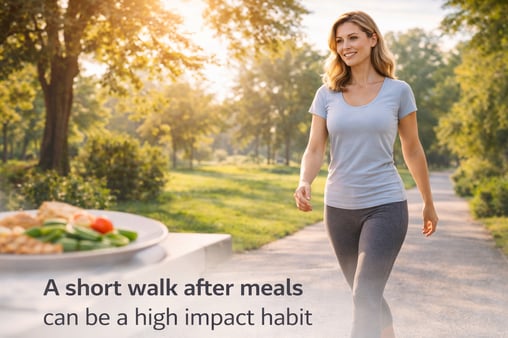
Small but powerful: 8 to 12 minutes after lunch is often more realistic than a full hour walk. Consistency wins.
Finally, steps are low friction. You do not need a gym, a perfect plan, or perfect motivation. That is why I like step goals for busy women over 30. It is the rare habit that improves health while also reducing decision fatigue.
How do 5k, 7.5k, 10k, and 15k compare?
Most people get big returns by reaching 7,500 steps consistently, then using 10,000 as an optional upgrade. Higher targets can help, but the payoff often slows at higher ranges.
In real life, steps work best as a flexible framework. A 10,000 goal is great if it fits your commute, lifestyle, and energy. But if 10,000 makes you feel like you failed on busy days, it is not serving you. Choose a goal that makes you show up again tomorrow.
| Daily steps | Typical label | What you might notice | Best use | Reality check |
|---|---|---|---|---|
| 5,000 | Low active | Less stiffness, better mood, easier digestion. | Habit building and breaking up sitting time. | Huge win if you are coming from under 3,000. |
| 7,500 | Somewhat active | Often a high return zone for general health. | A realistic long term daily baseline. | Many benefits appear before 10,000. |
| 10,000 | Active | Better maintenance, higher daily burn, stronger routine. | Great default if it fits your schedule. | Not required for progress. |
| 15,000 | Highly active | Supports endurance and high output lifestyles. | Active jobs or dedicated walking hobbies. | Recovery and joints matter more. |
A simple way to pick your personal target is to look at your last 14 days, not your best day. If your “normal” day is 3,200 steps, setting 10,000 tomorrow is not discipline, it is a guaranteed failure loop. But setting 4,200 and hitting it 12 times in 14 days is a real fitness upgrade.
Also remember: step goals are not only about calories. They are about NEAT (non exercise activity). NEAT is the movement you do outside workouts. It often decides why two people with the same gym routine get different results.
Digital confirmed data for the table
Digital confirmed dataDevice tracked studies show benefits start far below 10,000, and the curve often plateaus around 7,500 to 9,000 steps. Below are confirmed numbers from large wearable based datasets and meta analyses, included to validate the step ranges used in the comparison table above.
Note: These are associations, not guarantees. Still, they are useful for choosing a realistic daily step goal for fitness.
| Study and population | Step comparison | Outcome | What it means in plain language |
|---|---|---|---|
| JAMA Internal Medicine (2019) Older women, mean age 72 |
~4,363 steps vs ~2,718 steps | Lower mortality risk at higher steps (adjusted) | Going from very low steps to a modest daily walk was linked to a large improvement in outcomes for this group. |
| JAMA (2020) summary US adults, accelerometer measured |
8,000 vs 4,000 steps | Lower mortality risk at higher steps | In this dataset, higher steps were linked to better outcomes versus a low step baseline. |
| JAMA (2020) summary US adults, accelerometer measured |
12,000 vs 4,000 steps | Lower mortality risk at higher steps | Higher steps continued helping, but many analyses show diminishing returns beyond the mid range. |
| JACC (2023) summary Meta analysis across studies |
Optimal zone often reported under 10k | Lower mortality and fewer events at higher steps | There is typically an “optimal zone” under 10k for many outcomes, with plateaus above 10k. |
Sources for these summaries are listed below in the Sources section, with links to the journal pages and ACC summaries. If you want one clean takeaway: aim for a goal that pulls your weekly average into the 7,000 to 9,000 range first, then decide if 10,000 feels enjoyable or stressful.
What 10000 steps weight loss results are realistic?
10000 steps weight loss results are realistic when steps support a gentle deficit you can repeat. Walking helps fat loss, but it does not guarantee it if nutrition, sleep, and stress are unmanaged.
Here is the honest version. 10,000 steps can move the scale, but it is rarely dramatic on its own. Steps create momentum. They improve your baseline daily activity and often reduce stress eating. But nutrition decides if your weekly trend goes down, stays flat, or slowly creeps up.
Steps can help in two ways. First, they raise daily energy expenditure without crushing recovery. Second, they improve appetite signals for many people, especially when walking is spread out through the day rather than done as one intense session.
Practical combo: steps + protein + fiber + 2 short strength sessions per week.
Where people get stuck is compensation. You walk more, then unknowingly eat more, snack more, or sleep worse. That cancels out the benefit. The fix is boring, but it works: keep meals structured, make protein non negotiable, and protect sleep while you increase steps.
If your goal is fat loss, I recommend you measure success in two ways: (1) weekly average steps and (2) weekly average waist measurement or how clothes fit. The scale can lag behind because of water retention, stress, cycle changes, and salty meals. The fit of clothes is often the earlier signal.
For a simple protein target approach, see: how much protein women 30+ need.
If you are sick, prioritize rest. If you have joint pain or chronic conditions, build gradually and consider clinician guidance.
What daily step goal for fitness should you choose?
Your best daily step goal for fitness is your baseline plus 10 to 20 percent, held for 2 to 3 weeks. This keeps progress steady without making the goal feel impossible.
This is the simplest way to progress without needing motivation every day. You measure reality, then build a target that is slightly challenging but doable. If you jump straight from 3,000 to 10,000, the goal becomes a daily fight. Many people respond with fatigue, cravings, irritation, and then quitting.
- Track 7 days: get your true average.
- Add 1,000 steps: or 10 to 15 minutes of walking.
- Hold it: keep it stable for 2 to 3 weeks.
- Upgrade: add another 1,000 steps or add strength twice weekly.
If your main goal is fitness, not just movement, you want two ingredients: consistent steps plus strength. Strength is what keeps you resilient and improves body composition. Steps are the base. Strength is the shaping tool.
Start here: strength training for beginners.
How to track steps accurately (so your goal is real)
To make a step goal meaningful, you need consistent tracking, not perfect tracking. Pick one primary device and stick to it for 2 to 4 weeks before judging your progress.
Step counts vary between phones, watches, and fitness bands. That is normal. Your goal is trend direction, not a perfect universal number. If your phone counts 7,800 and your watch counts 9,100 on the same day, do not panic. Choose one device as your “official” baseline and build consistency with it.
- Use the same device daily: swapping devices changes your baseline.
- Wear it the same way: if it is a watch, wear it consistently; if it is a phone, keep it on you.
- Track weekly averages: daily numbers swing, weekly averages tell the truth.
- Count purposeful walks: short post meal walks add up faster than you expect.
If you struggle with “busy days,” stop aiming for perfect daily numbers. Aim for weekly totals. Example: instead of chasing 10,000 every day, aim for 60,000 per week. That gives you flexibility while still pushing your trend up.
How long does 10,000 steps take and what does it burn?
For most people, 10,000 steps takes about 80 to 120 minutes total across a day. How long it takes depends on stride length, pace, and how often you stop.
Instead of forcing one huge walk, the most realistic plan is spreading steps into micro walks. Example: 10 minutes in the morning, 10 minutes after lunch, 10 minutes after dinner, plus normal life movement. That already covers a big portion of your goal.
Calories burned vary a lot by body size, pace, terrain, and fitness. Rather than obsessing over the exact number, treat steps like metabolic hygiene. You are telling your body: we move daily, we do not sit all day, and we support recovery. That is why steps are so useful in sustainable programs, especially for women 30+ who do not want extreme cardio stress.
Shortcut: if 10,000 is too much right now, aim for 7,500 consistently first. The habit matters more than the number.
What mistakes ruin step based progress?
The most common mistake is treating steps like punishment, then compensating with food and stress. Steps should support your life, not drain it.
- All or nothing thinking: missing the goal feels like failure, so you quit. Fix: track weekly average.
- Walking only at night: late intense walking can disrupt sleep for some people. Fix: add small blocks earlier.
- Ignoring strength: steps are a base, not a full fitness plan. Fix: 2 short strength sessions weekly.
- Under eating then bingeing: extra steps plus low protein often backfires. Fix: protein and fiber at each meal.
- Bad shoes and hard surfaces: foot and knee pain kills consistency. Fix: comfortable shoes and softer routes.
Another common mistake is skipping “step distribution.” A single long walk is fine, but many people get better energy and better appetite control when steps are spread across the day. If you sit for 6 hours and then do one big walk, you still sat for 6 hours. Breaking up sitting time is part of why steps help.
If your routine already feels too much, lower the target and protect consistency. That is the winning move.
How do you build from sedentary to 10k without burnout?
The easiest way is to focus on weekly averages, not perfect days. If you miss a day, you do not make up by overdoing it tomorrow.
Here is a simple 8 week progression that works well for real life schedules. Repeat any week if it feels too hard. The point is building an identity as someone who moves daily. This also helps your nervous system. When movement becomes normal, your body tends to feel safer, calmer, and less reactive.
- Week 1 to 2: baseline plus 1,000 steps per day
- Week 3 to 4: baseline plus 2,000 steps per day
- Week 5 to 6: add two brisk 10 minute blocks per week
- Week 7 to 8: choose your sustainable range, often 8,000 to 10,000
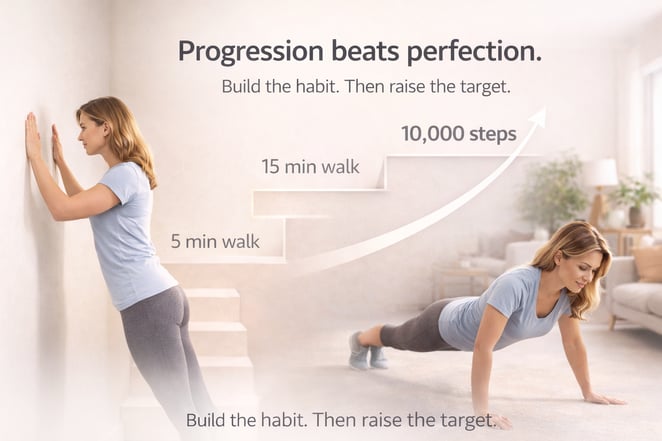
If you want a “minimum viable plan” for chaotic weeks: keep a lower floor goal. Example: 6,000 steps as the minimum, and 10,000 as the bonus. Floors create consistency. Bonuses create motivation without stress.
How can Health360: Weight & Anti-Age help you stay consistent?
Health360: Weight & Anti-Age helps you link steps with repeatable lifestyle routines, not just numbers. You set a step goal, track trends, and pair movement with structured guidance so it is easier to stay consistent.
My opinion: most people do not need more motivation. They need a system that makes good days easier to repeat. Health360: Weight & Anti-Age is designed around structured routines rather than calorie counting, so you can build progress with less mental load.
Get Health360: Weight & Anti-Age on Google Play
If you want a simple habit stack, also read: water timing and meal rhythm.
FAQ: common questions about the 10,000 steps a day goal
Do I need exactly 10,000 steps a day?
No. Many benefits show up below 10,000, especially when you move from a low baseline to consistent daily steps.
Are ten thousand steps health benefits real?
Yes. Higher step volume is consistently associated with better health outcomes, especially for people starting from low activity.
What 10000 steps weight loss results are realistic?
Support, not magic. Steps help fat loss most when nutrition and recovery are stable, and strength training is included.
What daily step goal for fitness should I pick if I am sedentary?
Baseline plus 10 to 20 percent. For many people, that is adding about 1,000 steps per day for a couple of weeks, then reassessing.
Is walking enough exercise?
It is a great foundation. Add 2 short strength sessions per week for better fitness and long term body composition.
Does step speed matter?
Yes, a little. Count builds your baseline, and a few brisk blocks per week improve cardiovascular fitness without long workouts.
How do I stay consistent when life gets busy?
Use weekly averages. Short post meal walks and small step increases beat all or nothing targets every time.
What sources support these step recommendations?
These are the key wearable based studies and guideline sources used above. Always match targets to your health status and starting point.
- Lee IM, Shiroma EJ, et al. Association of Step Volume and Intensity With All-Cause Mortality in Older Women. JAMA Internal Medicine (2019). JAMA Network
- Saint-Maurice PF, Troiano RP, et al. Association of Daily Step Count and Step Intensity With Mortality Among US Adults. JAMA (2020) summary. American College of Cardiology
- Stens NA, Bakker EA, Mañas A, et al. Relationship of Daily Step Counts to All-Cause Mortality and Cardiovascular Events. J Am Coll Cardiol (2023) summary. American College of Cardiology
- CDC. Adult Activity Guidelines. CDC
- WHO. Physical activity. WHO
Medical note: This article is educational and not medical advice. If you have a medical condition or symptoms, consult a qualified clinician.